

Personality Types

Deep dives into the 16 personality types, the Big Five traits, and what each profile means for your work, relationships and growth.

Featured Pillar Guide

4 Types of Personality Tests Explained

Learn the four personality types—Sanguine, Choleric, Melancholic and Phlegmatic—and compare Four Temperaments with DISC, MBTI, Big Five and IQ testing.

Read Complete Guide →
By Joshua PostAugust 3, 2026

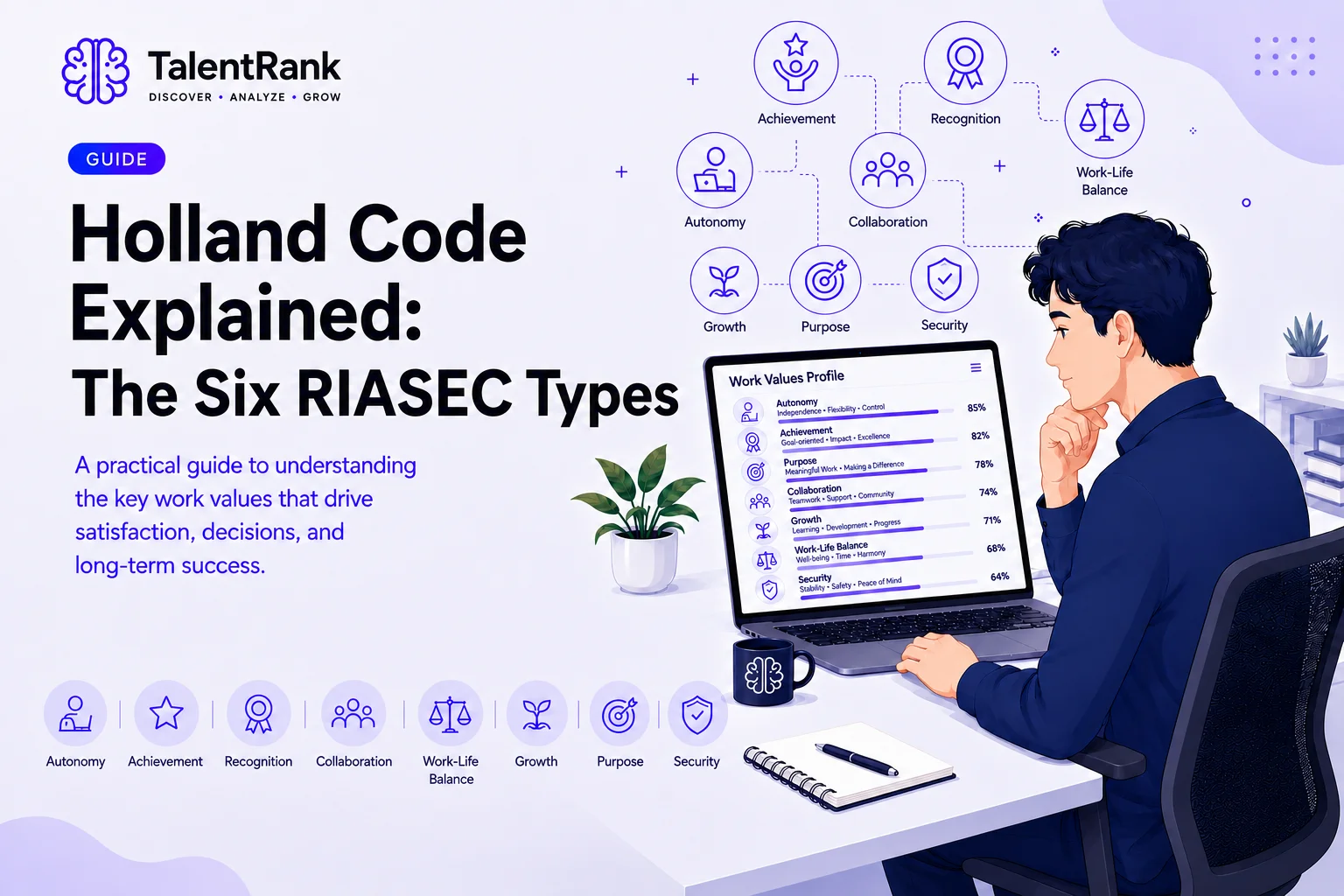
Holland Code Explained: The Six RIASEC Types and How to Use Yours

You take a free test online, get three letters back, and then what? A Holland Code is meant to make career choices feel less like guesswork, but a code on its own does not tell you much. RIASEC, the framework behind it, has been used by career advisers for decades, and it is genuinely useful once you understand what it is actually measuring. The confusion usually comes from tre…

Read article
By Joshua PostJuly 24, 2026

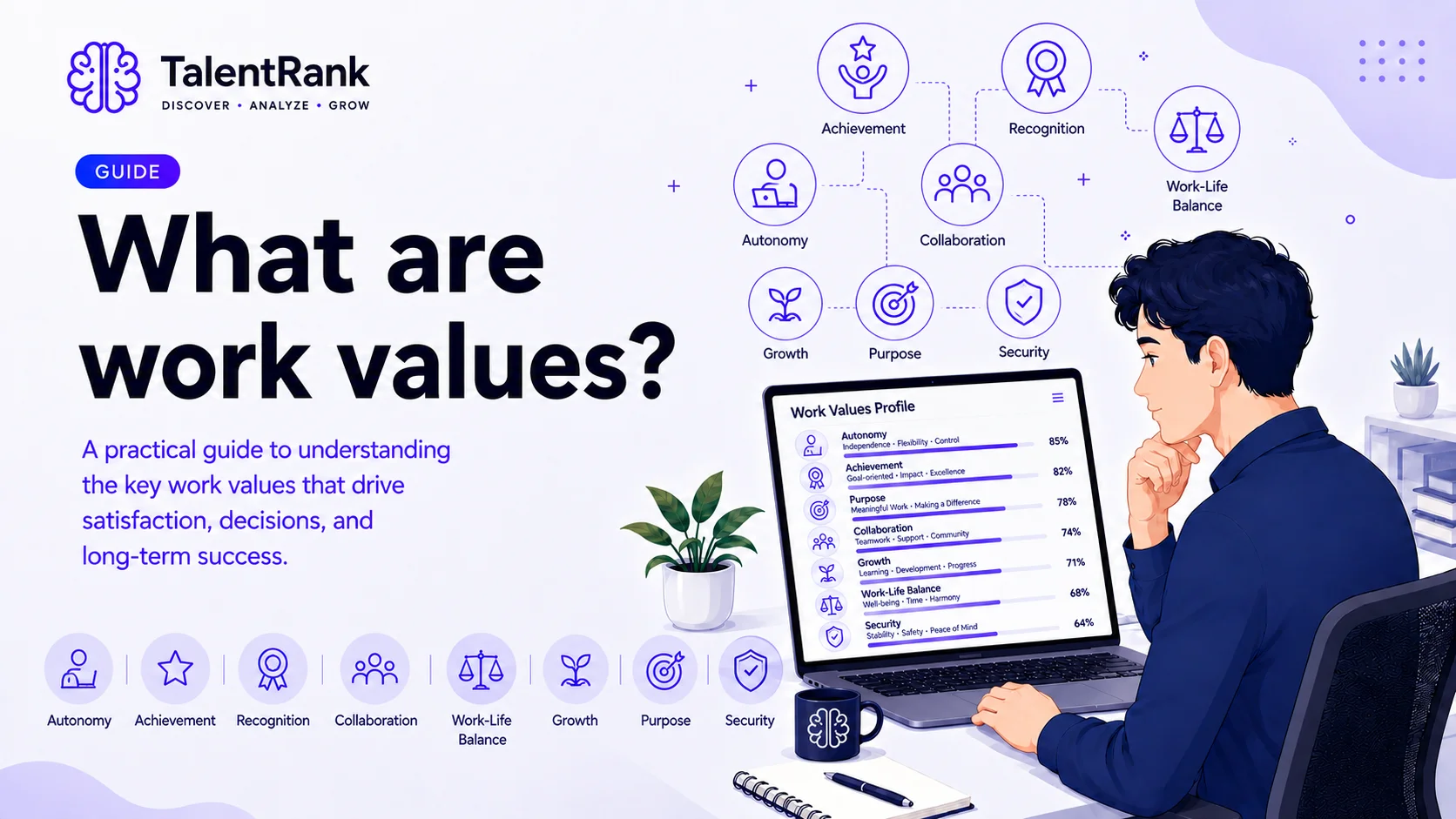
What Are Work Values? Meaning, Examples and Career Fit

A job can match your qualifications and still feel wrong. You may be capable of doing the work, interested in the field, and comfortable with the daily tasks, yet find that the environment drains you. The missing piece may be your work values: the conditions and outcomes you need from work to feel that your effort is worthwhile. Understanding your work values does not reveal on…

Read article
By Joshua PostJuly 22, 2026

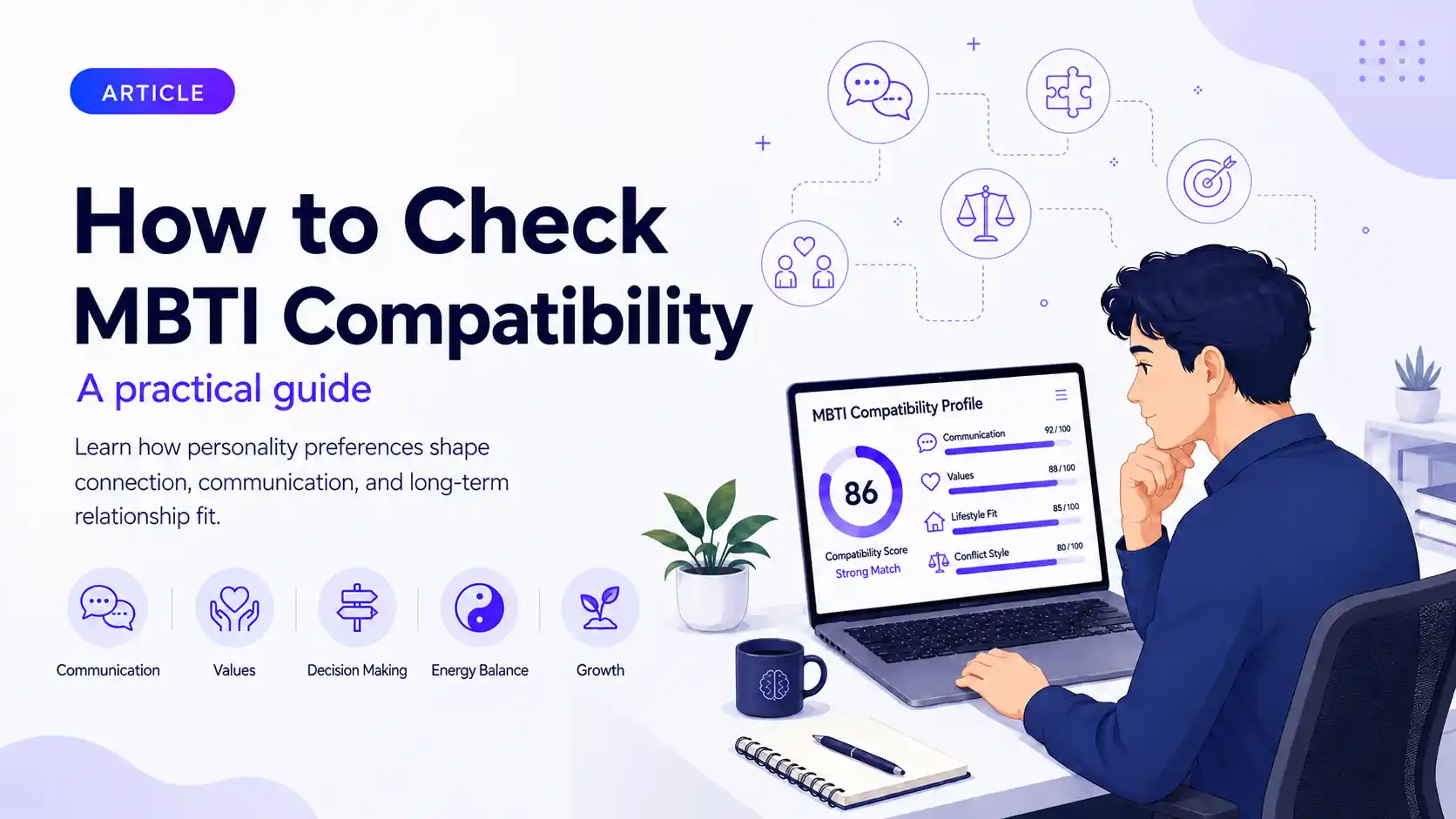
How to Check MBTI Compatibility: A Practical Guide

To check MBTI compatibility, first identify both people’s reported types, then compare how they prefer to direct energy, take in information, decide, and organize daily life. Use those differences to discuss communication, conflict, planning, and support. Treat any chart as a prompt for conversation, not a score or prediction. This guide shows a practical way to apply the four…

Read article
By Joshua PostJuly 21, 2026

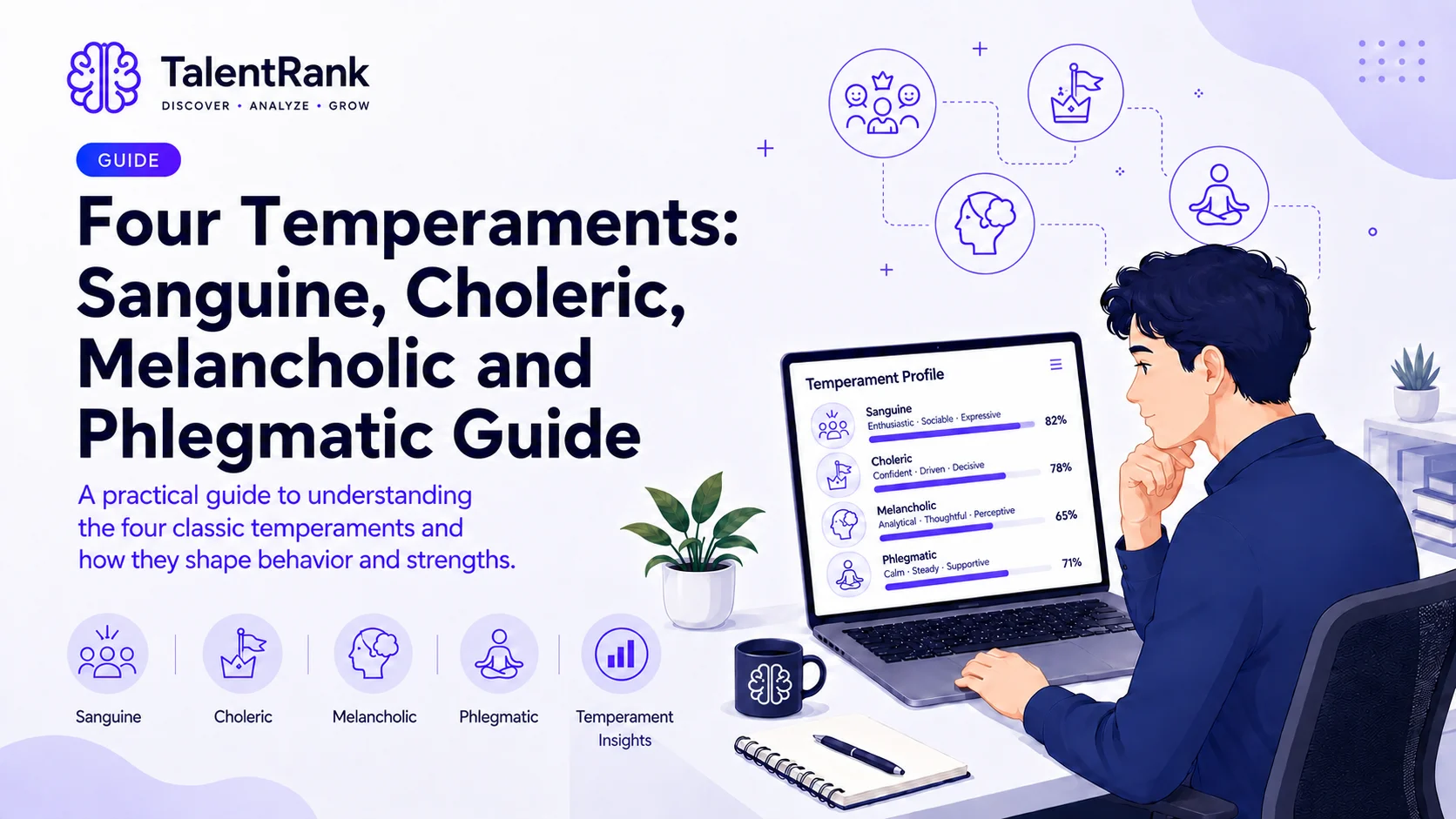
Four Temperaments: Sanguine, Choleric, Melancholic and Phlegmatic Guide

Learn the four personality types Sanguine, Choleric, Melancholic and Phlegmatic and compare Four Temperaments with DISC, MBTI, Big Five and IQ testing.

Read article

By Joshua PostMay 27, 2026

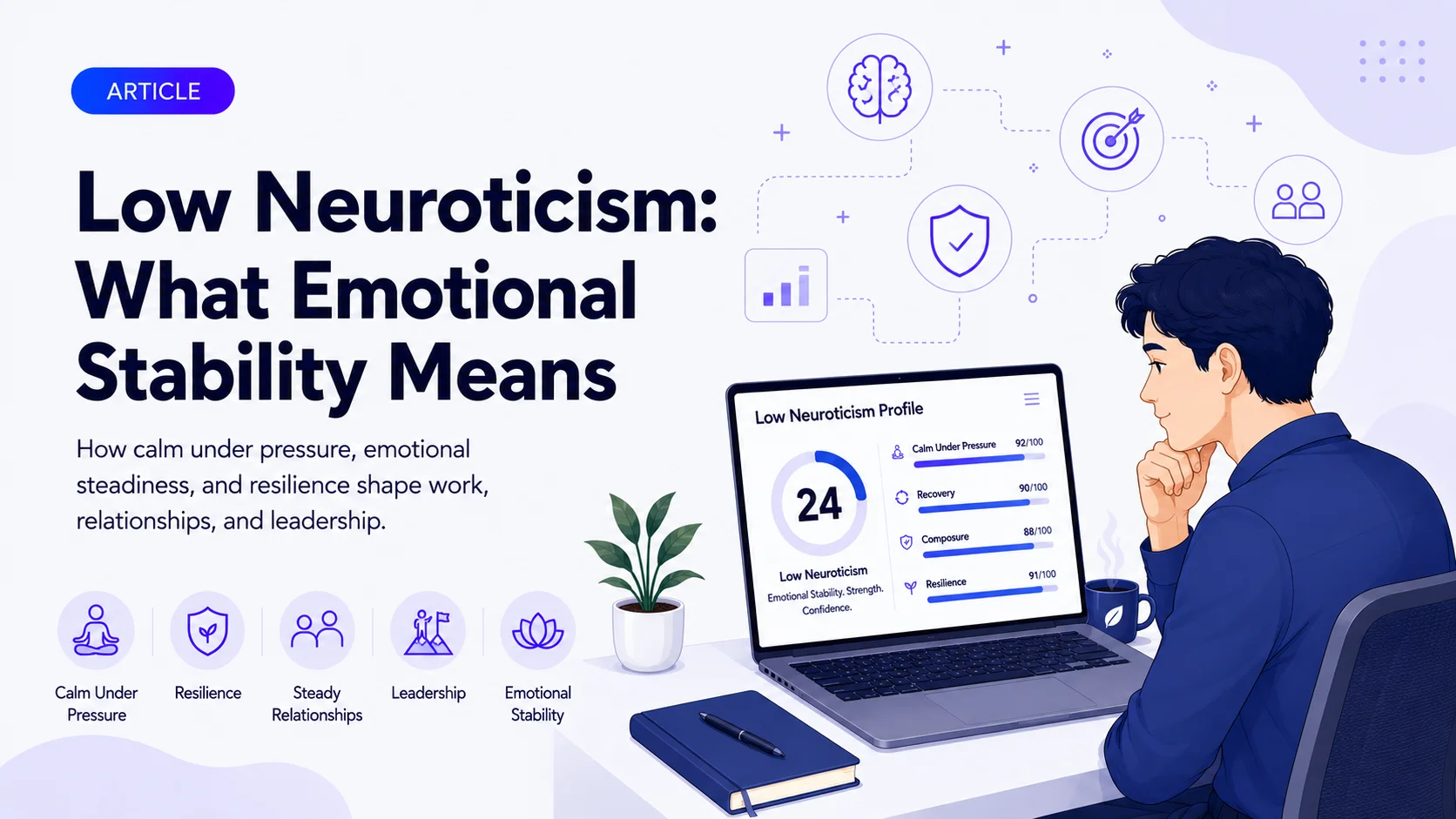
Low Neuroticism: What Emotional Stability Means | TalentRank

What Low Neuroticism Feels Like You've probably watched someone spiral over an email that you read, shrugged off, and forgot about by lunch. Low neuroticism, scored in roughly the 1st through 34th percentile on the Big Five personality model, means your baseline emotional reactivity is lower than most. Stress hits you, but it doesn't stick. A difficult conversation ends and you…

Read article

By Joshua PostMay 27, 2026

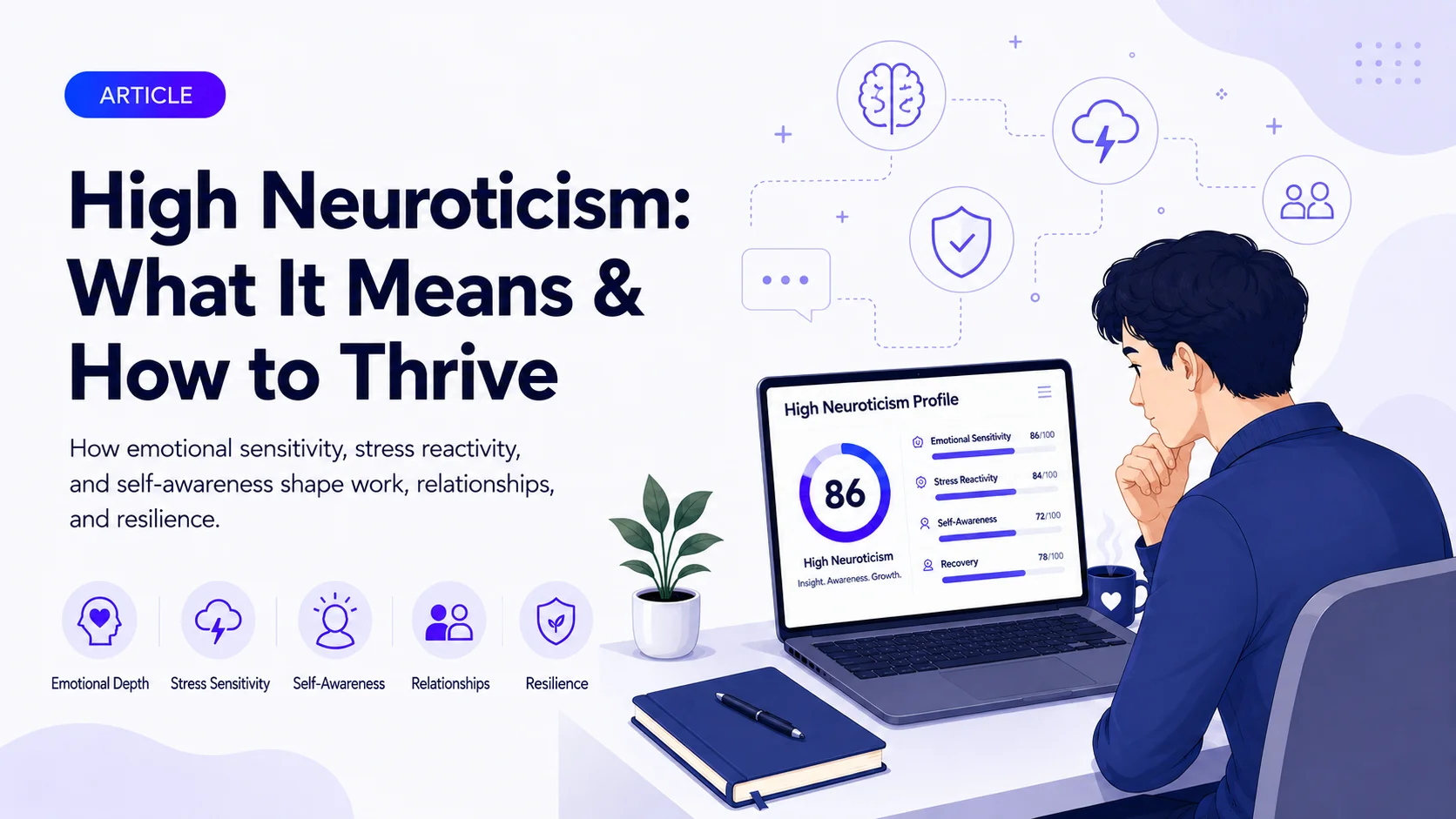
High Neuroticism: What It Means & How to Thrive | TalentRank

If you scored high on Neuroticism, your first instinct was probably to worry about what it means. That instinct is itself a perfect illustration of the trait. You're not broken. You're not mentally ill. You are, by temperament, someone whose nervous system registers threat, uncertainty, and emotional signal more intensely than most people around you. That creates real costs. It…

Read article
By Joshua PostMay 27, 2026

Low Agreeableness: Career Advantages & Challenges | TalentRank

You've probably been told you need to be "more of a team player" by someone who wanted you to stop pointing out that the team was wrong. That's the experience of scoring low on agreeableness, the Big Five trait that measures your tendency toward cooperation, warmth, and social harmony. If you land in the 1st through 34th percentile, you're built differently than most. The resea…

Read article
By Joshua PostMay 27, 2026

High Agreeableness: Strengths, Careers & Challenges | TalentRank

You probably said yes to something this week that you wanted to say no to. And you probably did it so smoothly that the other person had no idea. That's a highly agreeable person operating on autopilot. The high agreeableness personality is one of the most socially valuable trait profiles in the Big Five model, but it can also be costly. Scoring in the 70th to 99th percent…

Read article

By Joshua PostMay 27, 2026

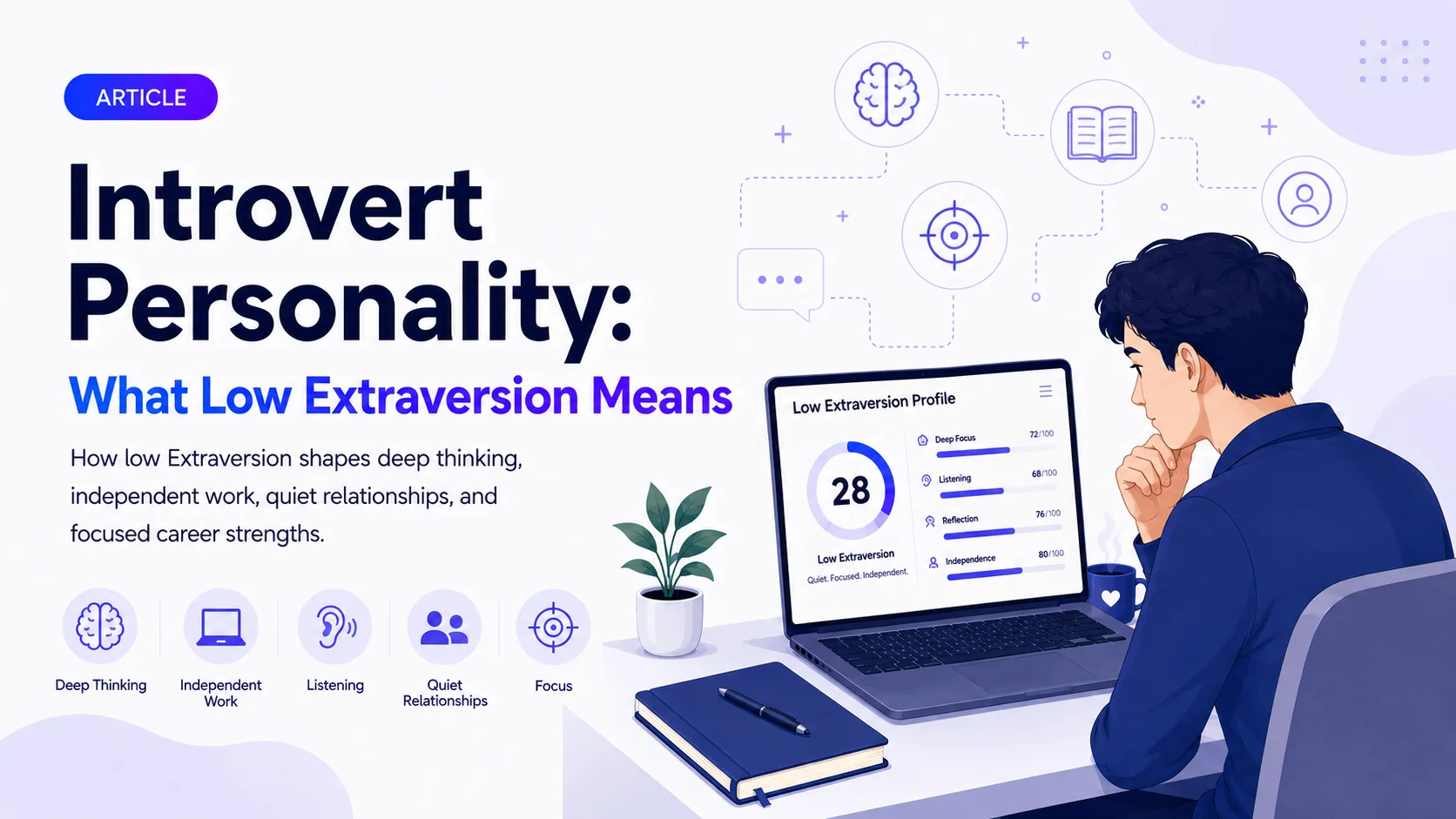
Introvert Personality: What Low Extraversion Means | TalentRank

You probably do your best thinking alone. You might prefer a quiet night in as opposed to a large social gathering. You probably already know this and understand why… you’re introverted. What may surprise you is that the reason for that is quite a bit more interesting than “you recharge your social battery alone.” If your introvert personality scored in the 1st through 34t…

Read article

By Joshua PostMay 27, 2026

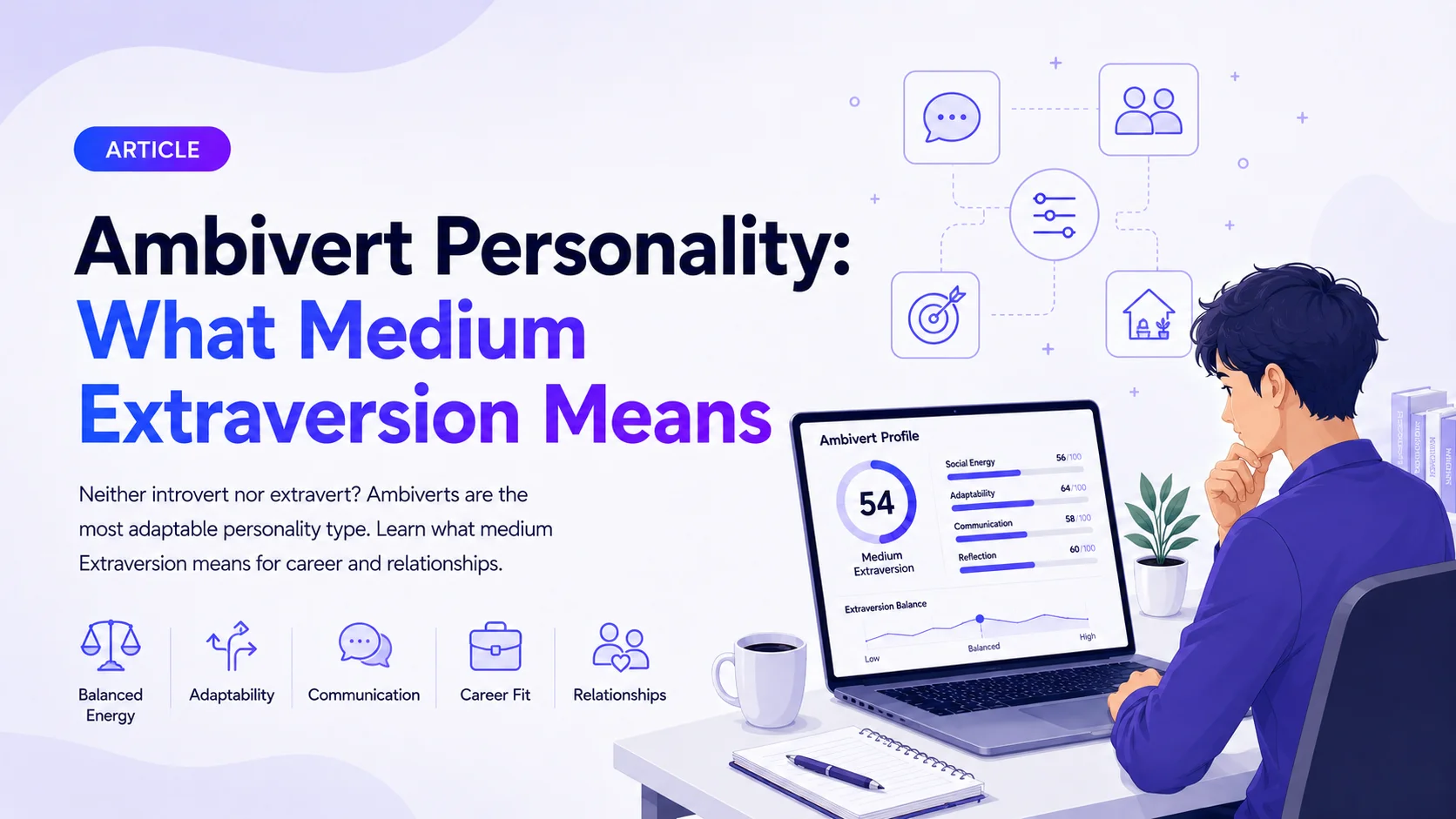
Ambivert Personality: What Medium Extraversion Means

You've probably never fully identified with either "introvert" or "extravert." That's because you're neither. And that's actually an advantage. If you score in the 35th to 69th percentile on Extraversion, you fall into what psychologists call the ambivert personality zone. You're not a social butterfly and you're not a recluse. You sit in the wide, well-populated middle of…

Read article
By Joshua PostMay 22, 2026

High Extraversion: Careers, Strengths & Meaning | TalentRank

You probably think out loud, make decisions in conversation, and feel more alive when you're around other people than when you're alone. Congratulations… you’re high extraversion. And if you've landed in the 70th percentile or above, it shapes nearly everything about how you work, lead, and connect. The high extraversion personality is a fundamentally different reward architect…

Read article

By Joshua PostMay 21, 2026

Low Conscientiousness: Careers & Strategies | TalentRank

You've probably heard some version of "you have so much potential if you'd just apply yourself" at least a dozen times in your life. From teachers. From parents. From managers who watched you produce brilliant work in two frantic hours while ignoring every task on your to-do list for the three weeks before that. Low conscientiousness is one of the most misunderstood personality…

Read article

By Joshua PostMay 21, 2026

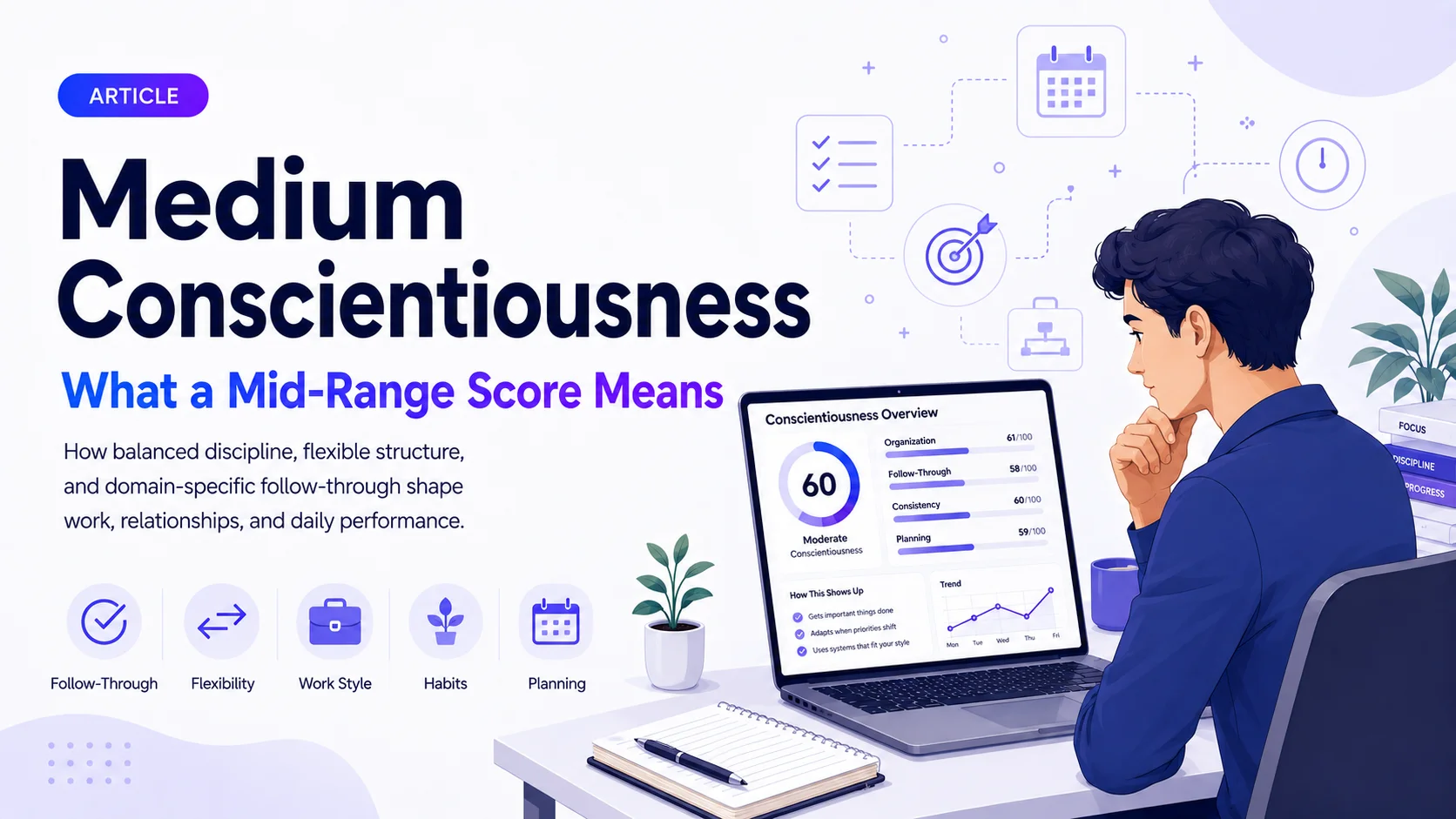
Medium Conscientiousness: What a Mid-Range Score Means | TalentRank

You probably meet your deadlines but don't plan your weekends in advance. You're organized about the things that matter to you and chaotic about the rest. That's a moderate conscientiousness personality in action. If your Big Five score landed between the 35th and 69th percentile on Conscientiousness, you're in the most common part of the distribution. And despite what som…

Read article
By Joshua PostMay 21, 2026

High Conscientiousness: Careers, Strengths, and the Shadow Side

You probably have a system for most things in your life. And you probably get frustrated when other people don't. That frustration tells you something real about your high conscientiousness personality and how your brain is wired relative to everyone else's. Scoring in the 70th percentile or above on Conscientiousness puts you in a category that psychologists have spent de…

Read article

By Joshua PostMay 21, 2026

Low Openness: Careers, Strengths & What It Means | TalentRank

You probably didn't get excited reading about Openness. The descriptions of creative, adventurous, novelty-seeking people probably sounded exhausting. Good news, that tells you something useful about yourself. Scoring low on Openness, in the 1st to 34th percentile range, doesn't mean you're incurious or boring. It means your curiosity points in a different direction. Toward mas…

Read article

By Joshua PostMay 21, 2026

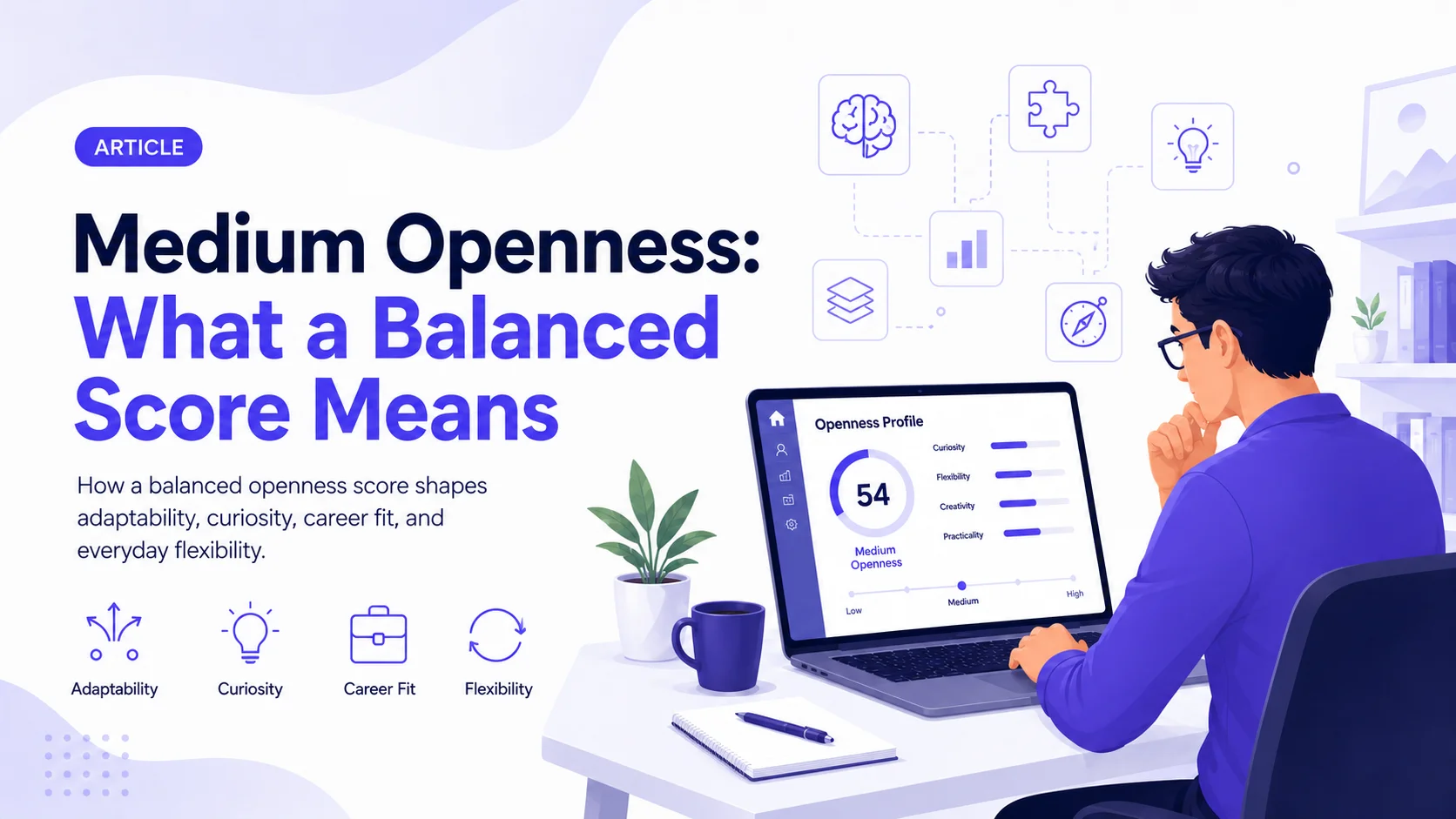
Medium Openness: What a Balanced Score Means | TalentRank

You probably read the descriptions of high and low Openness and thought "I'm kind of both, depending on the day." That can absolutely be true. The moderate openness personality is the most common result on the Big Five, and it's also the most misunderstood. Most personality content is written for the extremes because extremes are easier to dramatize. High Openness gets describe…

Read article

By Joshua PostMay 21, 2026

High Openness: Careers, Strengths & What It Means | TalentRank

You probably have fifteen browser tabs open right now, and at least three of them have nothing to do with what you sat down to work on. One is a Wikipedia rabbit hole about the Byzantine Empire. One is a Substack from someone whose work you discovered at 1 a.m. last week. And one is a half-drafted note to yourself about a business idea you haven't told anyone yet. That's your h…
Read article
By Joshua PostMay 21, 2026

Neuroticism: What Your Score Really Means | TalentRank

If you scored high on Neuroticism, your first reaction was probably "that doesn’t sound good." Let's start there, because that reaction is itself a data point. The instinct to feel alarmed by the word "neuroticism" is understandable. It sounds clinical. It sounds like a verdict. It is neither. Neuroticism is one of the five core dimensions in the Big Five personality model, and…

Read article
By Joshua PostMay 21, 2026

Agreeableness: What Your Score Means for Career and Life

Here is one of the most counterintuitive findings in personality research: the people who earn the most money, on average, are not the warmest or most cooperative. They are the ones who negotiate hard, say no without guilt, and tolerate interpersonal friction without losing sleep. Lower Agreeableness, it turns out, predicts higher income (Judge, Livingston & Hurst, 2012). T…

Read article
By Joshua PostMay 21, 2026

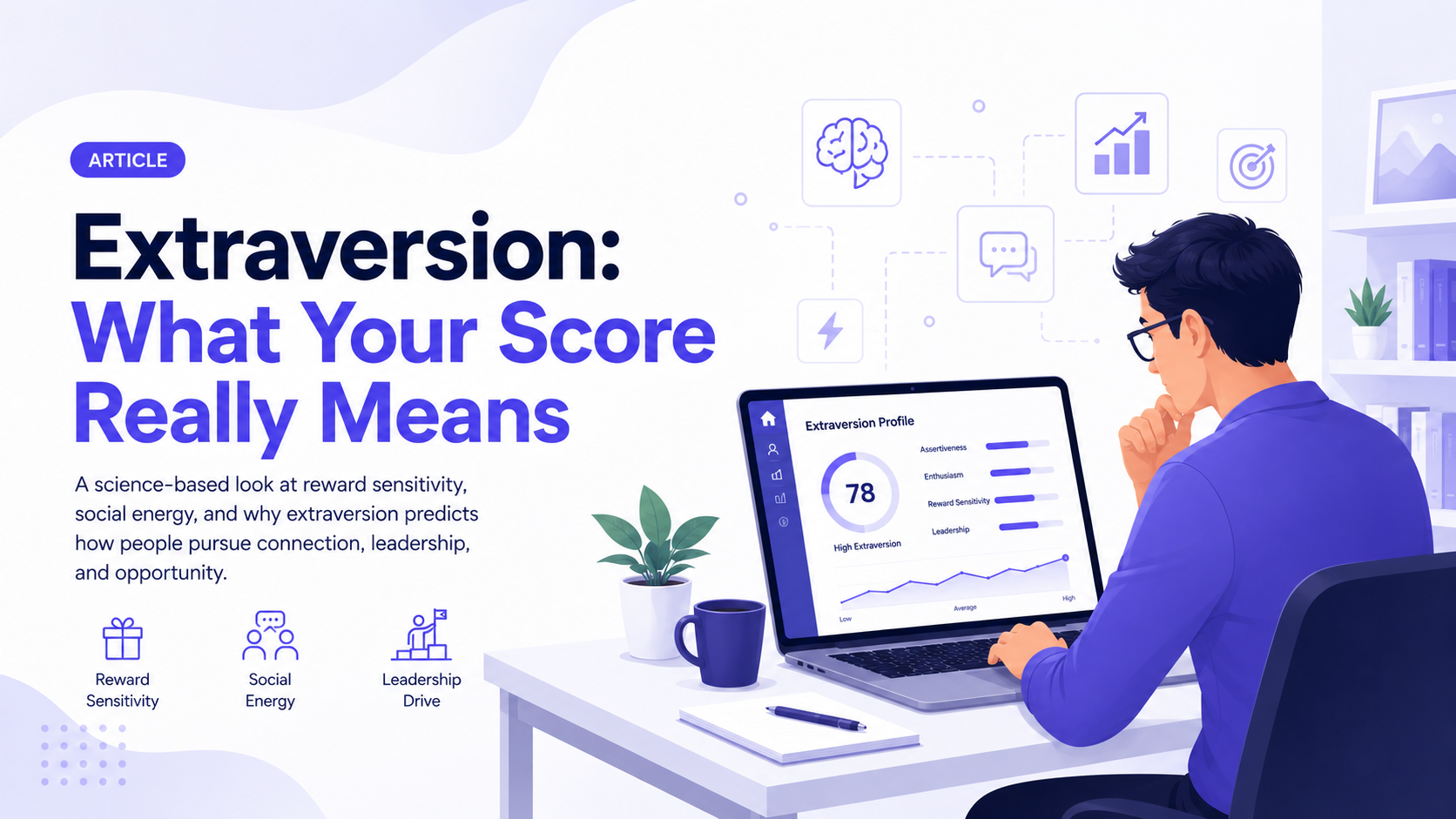
Extraversion: What Your Score Really Means

You've been told extraversion is about how much you like being around people. Perhaps surprisingly, that's not what it actually measures. The real story is about reward sensitivity, dopamine, and why two people with identical scores can look completely different in daily life. Here is what the science actually says. What Extraversion Actually Measures The pop psychology version…

Read article
By Joshua PostMay 17, 2026

Conscientiousness: What Your Score Means for Success

Think about the person in your office who color-codes their calendar, arrives five minutes early to every meeting, and somehow finishes every project before the deadline. Now think about the person whose desk looks like a filing cabinet exploded but who never, ever misses a commitment. Both of them score high on Conscientiousness. The trait is wider than tidiness. Conscientious…

Read article
By Joshua PostMay 17, 2026

Openness to Experience: What Your Score Really Means | TalentRank

You've always had one more question than everyone else in the room. The meeting wraps up, people are shuffling toward the door, and you're still turning the problem over, because you noticed a thread nobody pulled. Or maybe your version looks different: you get restless after about six months in any role, not because you're flakey, but because once the novelty drains out, somet…

Read article
By Joshua PostMay 17, 2026

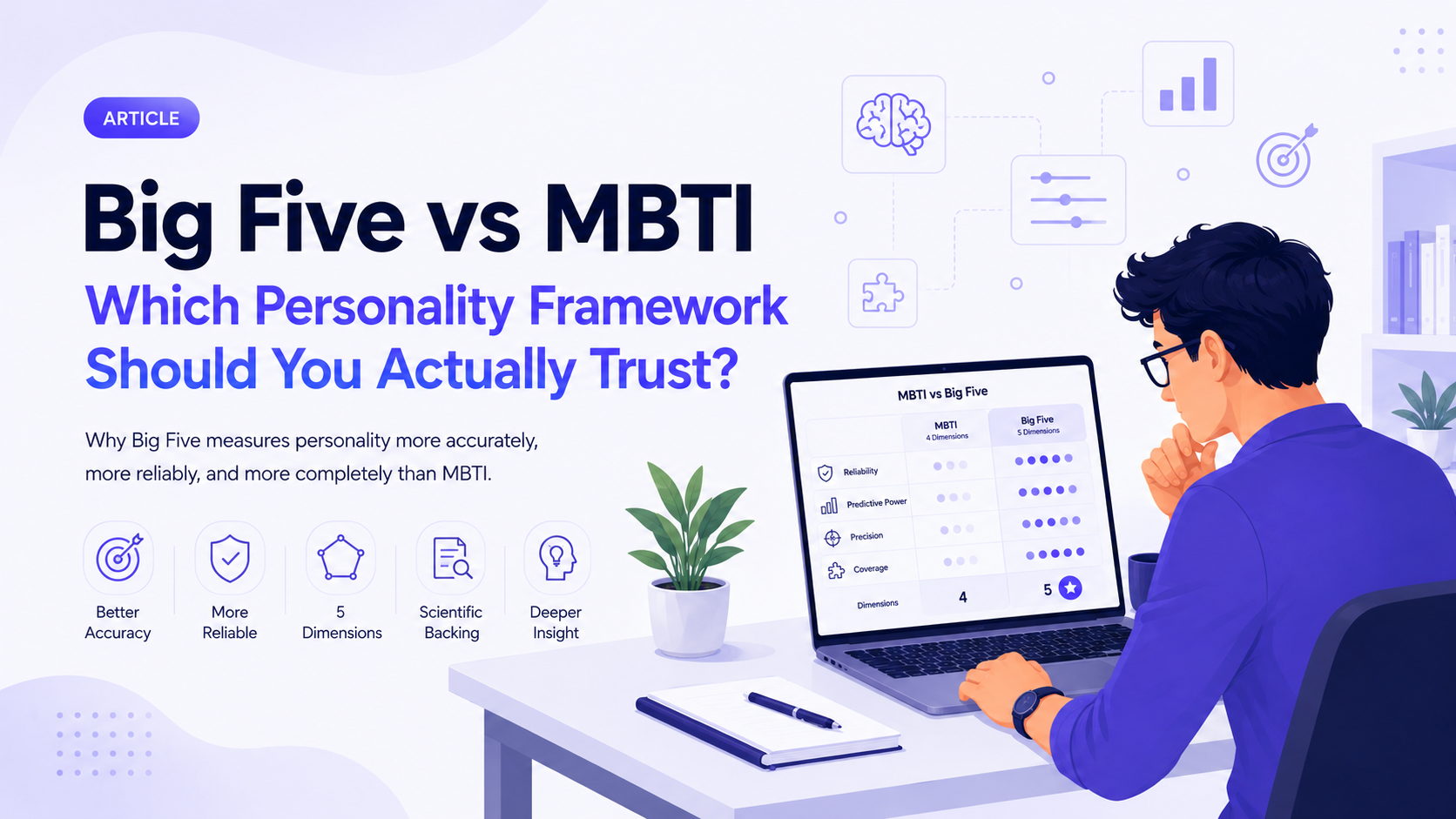
Big Five vs MBTI: Which Personality Framework Should You Actually Trust?

You've probably wondered at some point whether your four-letter type actually means anything. Maybe you retook the test at a different time and got a different result. Maybe you heard that MBTI is pseudoscience and you weren't sure whether to believe them. Maybe you just found out the Big Five exists and now you want to know what, exactly, you've been using. Here's the answer:…

Read article
By Joshua PostMay 6, 2026

What Are Big Five Personality Traits: The Complete Science-Based Guide | TalentRank

You probably found this page because a number popped up on a screen, something like "86th percentile in Openness" or "low Conscientiousness," and you thought: what does that actually mean? How do I use that? Maybe you've been trying to understand why you think and work and relate to people the way you do, and you're tired of horoscopes and 16-type labels that feel like they cou…

Read article
By Joshua PostMay 4, 2026

Moderate Neuroticism: What a Mid-Range Score Means | TalentRank

Meta description: Moderate neuroticism means you handle stress without being defined by it. Learn what this balanced score means for your career and emotional life. You probably handle stress better than you give yourself credit for, and worse than you think you should. That's not a contradiction. That's a moderate neuroticism score. Moderate neuroticism means you sco…

Read article
By Joshua PostMay 2, 2026

Moderate Agreeableness: What a Balanced Score Means

You're probably the person who can hold your ground in a negotiation and then buy the other person a drink afterward. Both felt natural. That's not a contradiction. That's moderate agreeableness in action. Scoring in the 35th to 69th percentile on agreeableness means you sit in the middle of one of psychology's most consequential personality dimensions. Not a pushover. Not…

Read article