

Monica Geller, Molly Weasley, Ochaco Uraraka, Leslie Knope, Meg March, and Cher Horowitz are some of the fictional characters most often typed as ESFJ. They're the hosts, organizers, and caretakers of their stories: the ones who feed everyone, keep the group together, and notice when someone's left out.
These typings are interpretations. No fictional character has taken an MBTI assessment, and fans often disagree. This guide explains why each character gets read as ESFJ, where the case is weaker, and how to judge an ESFJ typing yourself.
Quick List of ESFJ Characters
The confidence labels below reflect how strong the case is in this article's reading. They aren't test scores.
Character | Work | Medium | Interpretation | Why it's plausible |
Monica Geller | Friends | TV | Stronger case | Host, organizer, caretaker of the group |
Molly Weasley | Harry Potter | Books/film | Stronger case | Nurturing, practical, fiercely protective |
Ochaco Uraraka | My Hero Academia | Anime/manga | Stronger case | Warm, supportive, driven by care for family |
Meg March | Little Women | Novel/film | Stronger case | Social, traditional, values home and belonging |
Cher Horowitz | Clueless | Film | Plausible | Socially attuned, loves organizing other people's lives |
Leslie Knope | Parks and Recreation | TV | Debated | Often typed ESFJ or ENFJ |
Sakura Haruno | Naruto | Anime/manga | Debated | Often typed ESFJ or ESTJ |
What Makes a Character Seem ESFJ?
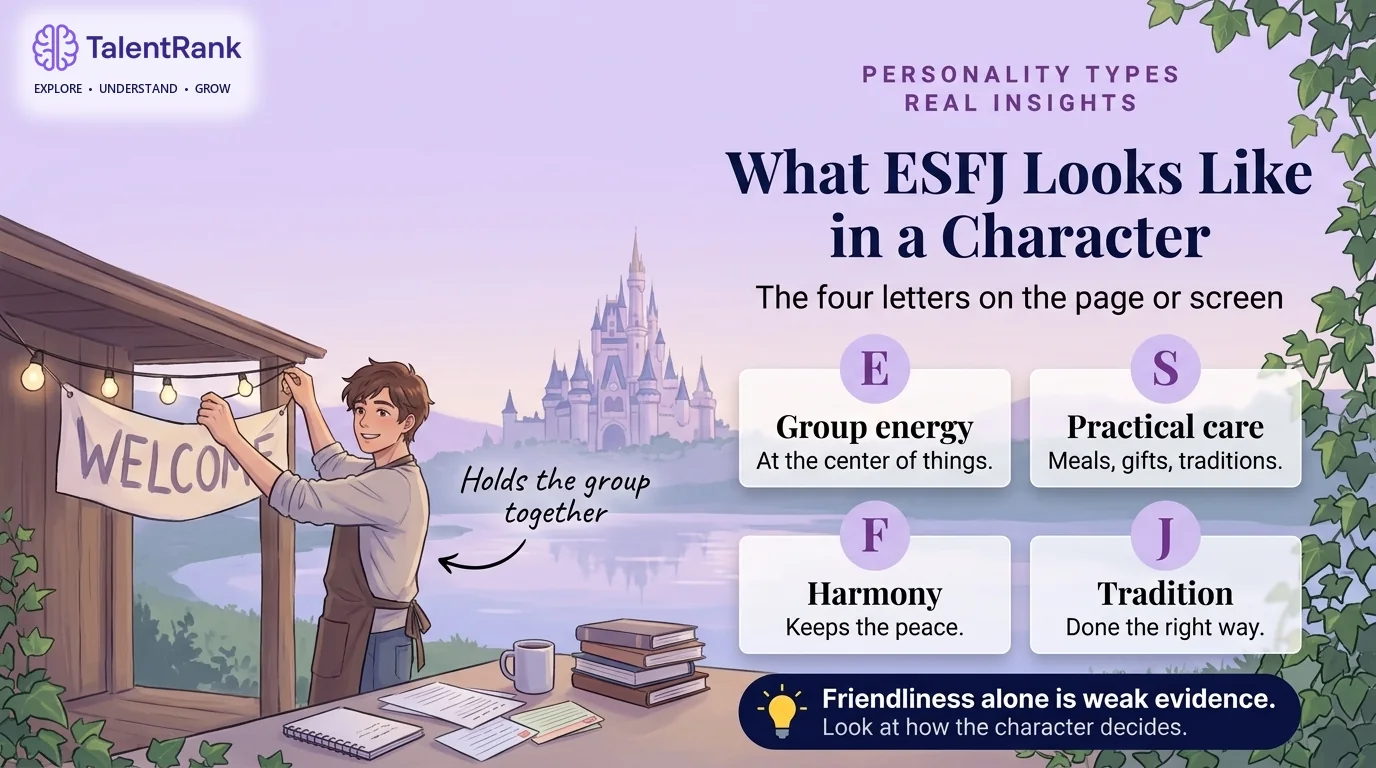
ESFJ stands for Extraversion, Sensing, Feeling, and Judging. The official MBTI preference descriptions go deeper than the "people-pleaser" stereotype.
Extraversion Means Energy From the Group
ESFJ characters are usually at the center of their social world. They host, check in, and organize, and they tend to feel unsettled when the group is split up. (See TalentRank's E vs. I guide.)
Sensing Means Practical, Concrete Care
Sensing is a preference for concrete, specific information. In ESFJ characters, it often shows up as practical care: meals, traditions, remembered birthdays, a tidy home. Molly Weasley's hand-knitted sweaters are a good example. (More in our sensing vs. intuition guide.)
Feeling Means Harmony Matters
Feeling means decisions are weighed by their effect on people. ESFJ characters are often the ones smoothing conflict or making sure everyone feels included. That can make them seem controlling when they push too hard for harmony.
Judging Means Structure and Tradition
Judging is a preference for plans and closure. ESFJ characters often love routines, holidays, and doing things "the right way", which makes them reliable and occasionally rigid.
ESFJ Anime Characters
Ochaco Uraraka, My Hero Academia
Ochaco decides to become a hero largely to earn money for her parents, a practical, family-centered motive. She's warm, encouraging, and quick to support Izuku Midoriya and her classmates. Her focus on the people around her, combined with a grounded sense of what needs doing, supports an ESFJ reading.
Sakura Haruno, Naruto (Debated)
Sakura starts the series focused on social standing and her crush on Sasuke, and she grows into a skilled medical ninja who cares deeply for her team. Many fans type her ESFJ for that people focus. Others argue ESTJ, pointing to her bluntness and drive to prove herself. Both readings have support.
ESFJ Characters in Movies and TV
Monica Geller, Friends
Monica is a chef, a host, and the organizer of the group's social life, and her apartment is where everyone gathers. Her love of cleanliness, rules, and tradition, from Thanksgiving dinners to her wedding plans, fits the Sensing and Judging side. Her concern for her friends, and her need to be a good host, fit the Feeling side.
Cher Horowitz, Clueless
Cher plays matchmaker for two of her teachers, gives a new student a full makeover, and genuinely enjoys arranging other people's lives. She's socially sharp and deeply invested in her social circle. Her growth over the film, learning to see past appearances, shows how ESFJ characters can move from managing people to understanding them.
Leslie Knope, Parks and Recreation (Debated)
Leslie is devoted to her friends and her town, famous for her waffles, her binders, and Galentine's Day. Many fans type her ESFJ for her love of tradition, gift-giving, and community. Others argue ENFJ, pointing to her big-picture vision for Pawnee and her drive to inspire change. She's a good test case for the Sensing versus Intuition question.
ESFJ Characters in Books
Molly Weasley, Harry Potter
Molly feeds everyone, knits Christmas sweaters for Harry as if he were one of her own, and runs a busy household with warmth and firm rules. Her fierce protectiveness comes through in her duel with Bellatrix Lestrange in the final book. It's hard to find a clearer picture of practical, protective care.
Meg March, Little Women
Meg, the eldest March sister, wants a comfortable home, pretty things, and a place in society. She values tradition and belonging and eventually builds her own family life with John Brooke. Her pull between social expectations and her own values is a realistic ESFJ struggle.
How to Evaluate Whether a Character Fits ESFJ
Kindness and sociability alone are weak evidence. A stronger case looks for patterns:
Practical care: does the character show love through concrete actions like meals, gifts, or hosting?
Group focus: do they keep the social group together and notice who's left out?
Harmony-seeking decisions: when conflict arises, do they try to restore peace?
Tradition and routine: do they value doing things properly, including holidays and rituals?
Consistency across versions: does the reading hold in the book, film, and show?
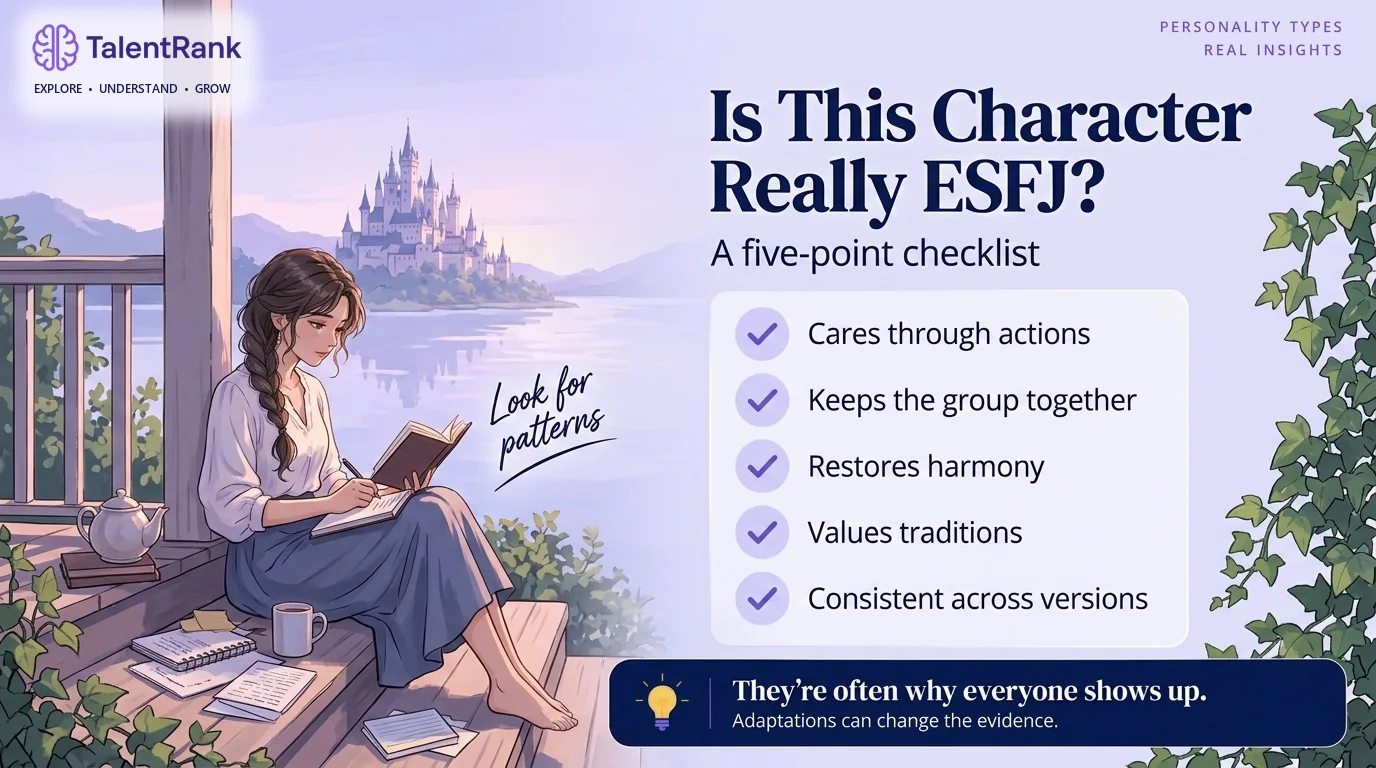
If a character fits several of these, an ESFJ reading is plausible. If they're only "friendly", the case is thin.
ESFJ or Another Type?
ISFJ characters share the practical care but are more reserved and behind the scenes. See our ISFJ characters guide.
ENFJ characters share the people focus but lean toward vision and inspiring change. See our ENFJ characters guide.
ESTJ characters share the structure and tradition but decide more by logic and rules than by harmony.
ESFJ-T Characters and What Fiction Can Show
The -A and -T suffixes come from 16Personalities, which adds a fifth scale called Identity and builds its model on Big Five research. (16Personalities) They aren't part of the official MBTI, and most stories don't give enough consistent evidence to judge them.
Explore Your Own Personality Traits
Typing characters can be a fun mirror for your own patterns. The TalentRank assessment goes further by measuring your Big Five personality traits, including extraversion, agreeableness, and conscientiousness. It takes about 12 to 15 minutes and won't confirm an MBTI type, but it gives you a more detailed picture. Take the TalentRank assessment, and if you're thinking about work, see our guide to ESFJ jobs and careers.
Frequently Asked Questions About ESFJ Characters
What fictional characters are ESFJ?
Characters commonly typed as ESFJ include Monica Geller, Molly Weasley, Ochaco Uraraka, Meg March, and Cher Horowitz. Leslie Knope and Sakura Haruno are also often typed ESFJ, though other readings exist.
Who are some ESFJ anime characters?
Ochaco Uraraka from My Hero Academia is one of the strongest examples. Sakura Haruno from Naruto is often typed ESFJ, though ESTJ is also argued.
Is Leslie Knope ESFJ or ENFJ?
Both are argued. The ESFJ reading emphasizes her traditions, gifts, and community focus; the ENFJ reading emphasizes her long-term vision for Pawnee.
Are ESFJ characters controlling?
Sometimes. Fiction often plays up how hard ESFJ characters push for harmony or tradition. Characters like Monica and Cher show that trait with both humor and warmth.
What is an ESFJ-T character?
The -T (Turbulent) label comes from 16Personalities, not the official MBTI, and it's rarely possible to judge from a story alone.
The Takeaway
ESFJ characters tend to hold their worlds together through practical care, traditions, and attention to how everyone's doing. Monica, Molly Weasley, Ochaco, and Meg March all show that pattern. Treat every typing as an interpretation, look for consistent evidence across the story, and notice how often these characters are the reason everyone else shows up.