


Enneagram 7, the Enthusiast, is the type that wants life to stay interesting. Sevens are usually upbeat and quick on their feet. Their list of plans is longer than anyone could finish. The Enneagram Institute gives their basic desire as "to be satisfied and content" and their basic fear as "being deprived and in pain."
That fear is the key to the type. Yes, Sevens love fun. Their energy also keeps them one step ahead of boredom and of anything that feels like a trap. This guide covers what drives Sevens and their two wings, plus how they can stay with hard things without losing what makes them good company.
Enneagram 7 Quick Profile
Type 7: The Enthusiast | |
Core desire | To be satisfied and content |
Core fear | Being deprived and in pain |
Center | Head (thinking), where fear is the key emotion |
Wings | 7w6 "The Entertainer" and 7w8 "The Realist" |
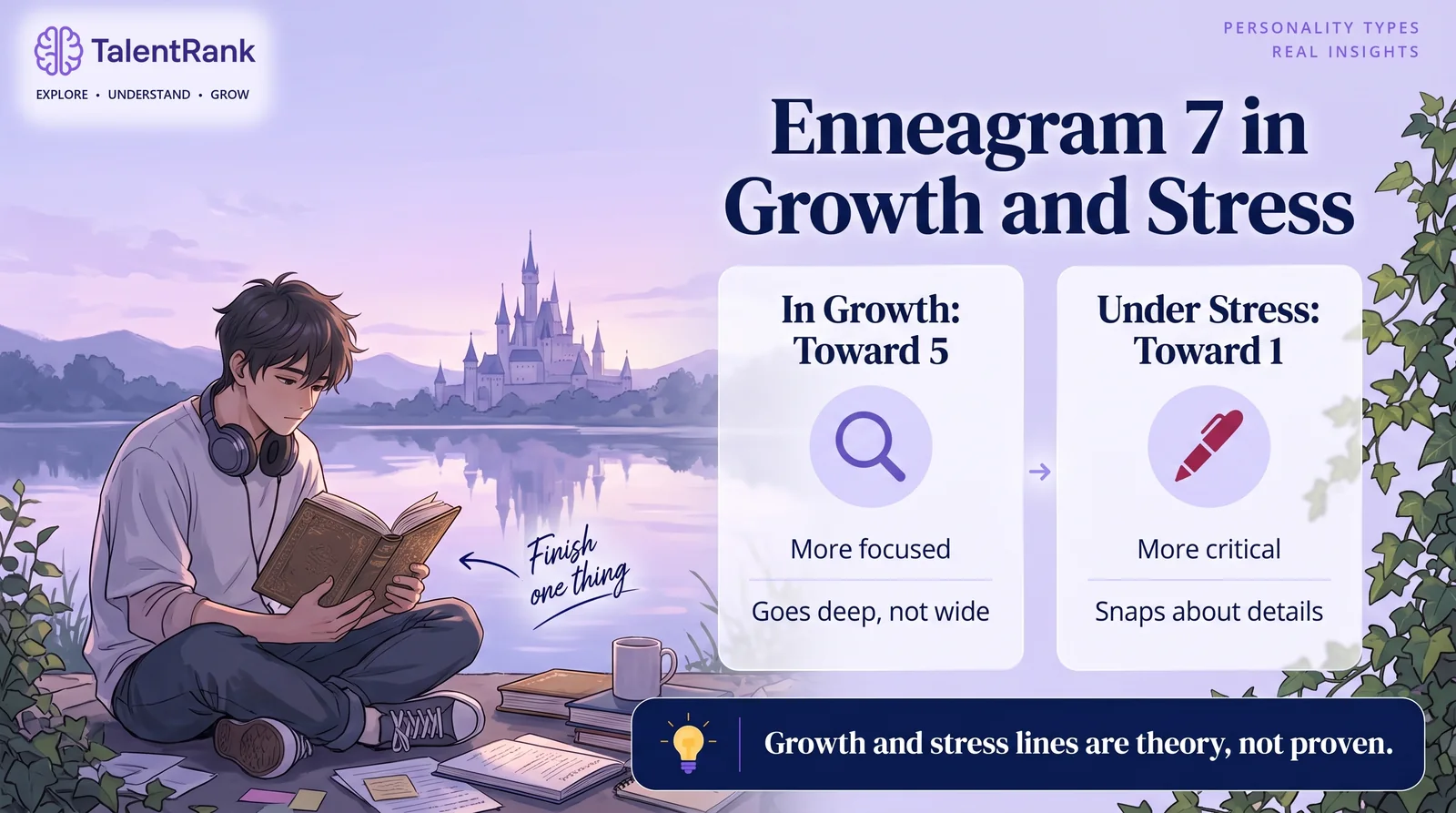
In growth | Moves toward Type 5: more focused and fascinated by life |
Under stress | Moves toward Type 1: perfectionistic and critical |
Typical strengths | Optimistic, inventive, resilient, generous with energy |
Typical blind spots | Scattered focus, avoiding pain, overcommitting |
For context, our guide to all nine Enneagram types shows how the Seven relates to the other eight.
What Keeps a Seven Moving
Sevens live in the future. Constantly. While one thing is happening, part of their mind is already planning the next trip, the next project, the next good conversation. Options feel like oxygen.
It surprises people that Sevens sit in the head center, where the core emotion is fear. Sevens don't usually look afraid. But their constant motion often works as an escape hatch. If something starts to hurt, there's always a new idea to chase.
That doesn't make Sevens shallow. Many are deeply thoughtful, and some read more than anyone they know, just across a dozen subjects at once. The issue is staying with one thing long enough, especially when it stops being fun.
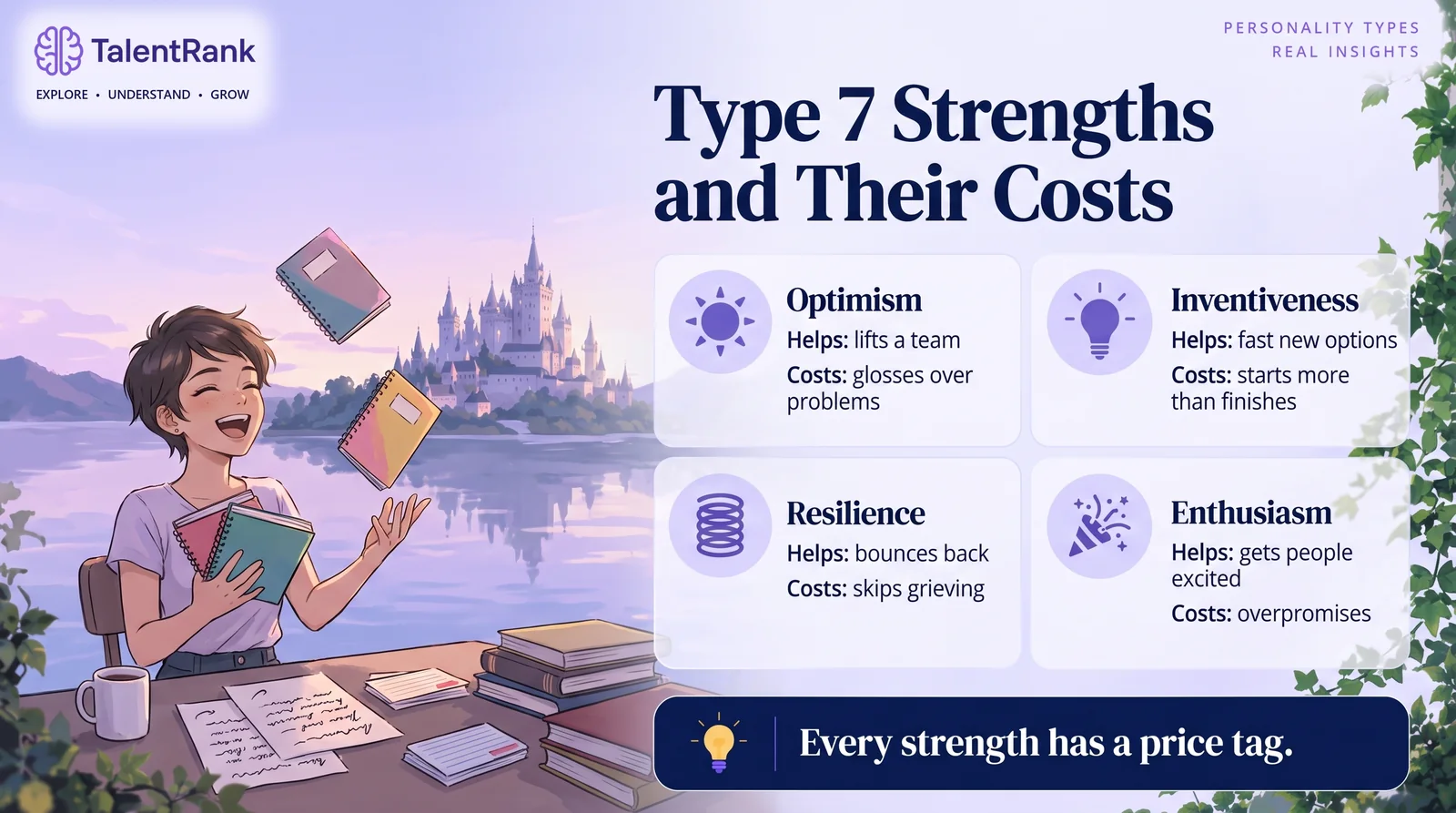
Seven Strengths and Their Costs
Healthy Sevens, according to the Enneagram Institute, become "deeply grateful and appreciative" and are often "generalists who do many different things well."
Strength | Where it helps | What it can cost |
Optimism | Lifts a team after a setback | Glosses over real problems |
Inventiveness | Generates options fast | Starts more than they finish |
Resilience | Bounces back quickly | Skips the grieving that needs to happen |
Enthusiasm | Gets people excited | Promises more than time allows |
Versatility | Handles many kinds of work | Rarely goes deep in one area |
The Restless Side of Type 7
At average levels, the Institute says Sevens can become "unable to say no to themselves." That might look like an overloaded calendar or a stack of half-finished courses. It can also show up as spending on the next exciting thing before the last one has been used.
Under stress, Enneagram theory says Sevens move toward Type 1 and become "perfectionistic and critical." The relaxed, joking Seven suddenly gets rigid and short-tempered, picking apart other people's work. If a usually easygoing Seven starts snapping about details, they're probably more overwhelmed than they're letting on.
How Sevens Grow
In growth, Sevens move toward Type 5 and become "more focused and fascinated by life." Instead of skimming the surface of many things, they go deep into a few, and they find that depth can be its own kind of excitement.
Practical moves that help:
Finishing one project before starting another, even a small one.
Staying with an uncomfortable feeling for ten minutes before reaching for a distraction.
Saying no to a good option to protect a great one.
Noticing the "I'll just…" impulse and asking what it's helping them avoid.
7w6 and 7w8: The Two Wings
The 7w6 (the Entertainer) adds the Six's loyalty and need for security. These Sevens tend to be warm and people-focused. They're also a bit more anxious than other Sevens. They often want adventure with friends close by.
The 7w8 (the Realist) adds the Eight's force. These Sevens tend to be more assertive and goal-driven, and more willing to take big risks. They often turn their ideas into businesses.
Enneagram 7 at Work
Sevens thrive where there's variety and room to experiment. Startups and marketing suit many of them, as do events and other creative fields. So does any role where they can generate ideas and hand off the detailed follow-through.
Hypothetical example: a Seven team lead pitches four new initiatives in one quarter, and the team is excited about all of them. By the end of the quarter, none are finished, because each new idea pulled attention from the last. His growth step isn't to stop having ideas. It's to pick one, name a finish date, and park the rest in a list he'll come back to.
Sevens usually do best with a partner or colleague who enjoys detail and with a clear finish line for each project.
Enneagram 7 in Relationships
Sevens bring fun and spontaneity to relationships. They plan the trips and find the new restaurant, and they're usually the ones who make an ordinary evening feel like an event.
The harder part is staying present when things get heavy. A Seven may change the subject during a difficult conversation or plan something exciting instead of sitting with a partner's sadness. Over time, a partner can feel that the Seven is great company in good times and hard to reach in bad ones.
What helps: partners who invite depth without shaming the Seven's lightness, and Sevens who practice staying in the conversation a little longer than feels comfortable.
Seven, Three or Eight?
Seven or Three: both are upbeat and busy. Sevens chase experiences and options; Threes chase accomplishments and recognition.
Seven or Eight: both are bold and energetic, especially a 7w8. Sevens move toward pleasure and freedom; Eights move toward control and impact.
Seven or Two: both can be warm and sociable. Twos focus on what other people need; Sevens focus on keeping life interesting for everyone, including themselves.
The Evidence, and a Measured Next Step
The Enneagram is best used for reflection, not measurement. A 2021 systematic review of 104 samples in the Journal of Clinical Psychology found mixed evidence for its reliability and validity and little support for wings or movement between types. It did find that Enneagram scales relate to the Big Five traits in the directions the theory predicts.
If the Seven sounds familiar, look at two Big Five traits. Our guide to high extraversion covers sociability and energy. Our guide to high openness covers curiosity and the pull toward new ideas. Measured scores can confirm or complicate what the type suggests.
The TalentRank assessment measures your Big Five traits and takes about 12 to 15 minutes. It won't assign an Enneagram number, but it shows where you land on each trait. Start the TalentRank assessment.
Frequently Asked Questions About Enneagram 7
What is an Enneagram 7?
Type 7, the Enthusiast, is the Enneagram type driven by the desire to be satisfied and to avoid pain and deprivation. Sevens tend to be optimistic and curious, and they love having options.
What is the Enneagram 7's core fear?
According to the Enneagram Institute, Sevens fear being deprived and in pain.
What is the difference between 7w6 and 7w8?
The 7w6 is usually warmer and more people-focused. The 7w8 is usually more assertive and more willing to take risks.
Where does a Seven go in stress and growth?
In Enneagram theory, Sevens move toward Type 1 under stress (more critical and perfectionistic) and toward Type 5 in growth (more focused and absorbed).
Why do Enneagram 7s struggle to finish things?
Finishing often means sitting through the boring or difficult stretch of a project, and Sevens are wired to move toward what feels fresh. Clear finish lines and accountability partners help.
Final Takeaway
Enneagram 7s make life bigger for the people around them. Their growth comes from discovering that staying with one thing, even a painful one, can be as rich as chasing the next. The spark doesn't go out when a Seven slows down.