

The core ENFJ characteristics are warmth, a strong awareness of other people, a drive to organize, and a habit of seeing potential in everyone. The Myers-Briggs Foundation describes ENFJs as "warm, empathetic, responsive, and responsible," "highly attuned to the emotions, needs, and motivations of others," and likely to "provide inspiring leadership." (Myers-Briggs Foundation)
ENFJ stands for Extraversion, Intuition, Feeling, and Judging. It's a relatively uncommon type: the official MBTI site estimates ENFJs at about 2.2% of the U.S. population, 2.8% of women and 1.4% of men. (MBTIonline)
This guide covers the main ENFJ traits, the strengths and tradeoffs that come with them, how ENFJs tend to work and relate to others, and what ENFJ men in particular often experience.
What Each ENFJ Letter Means
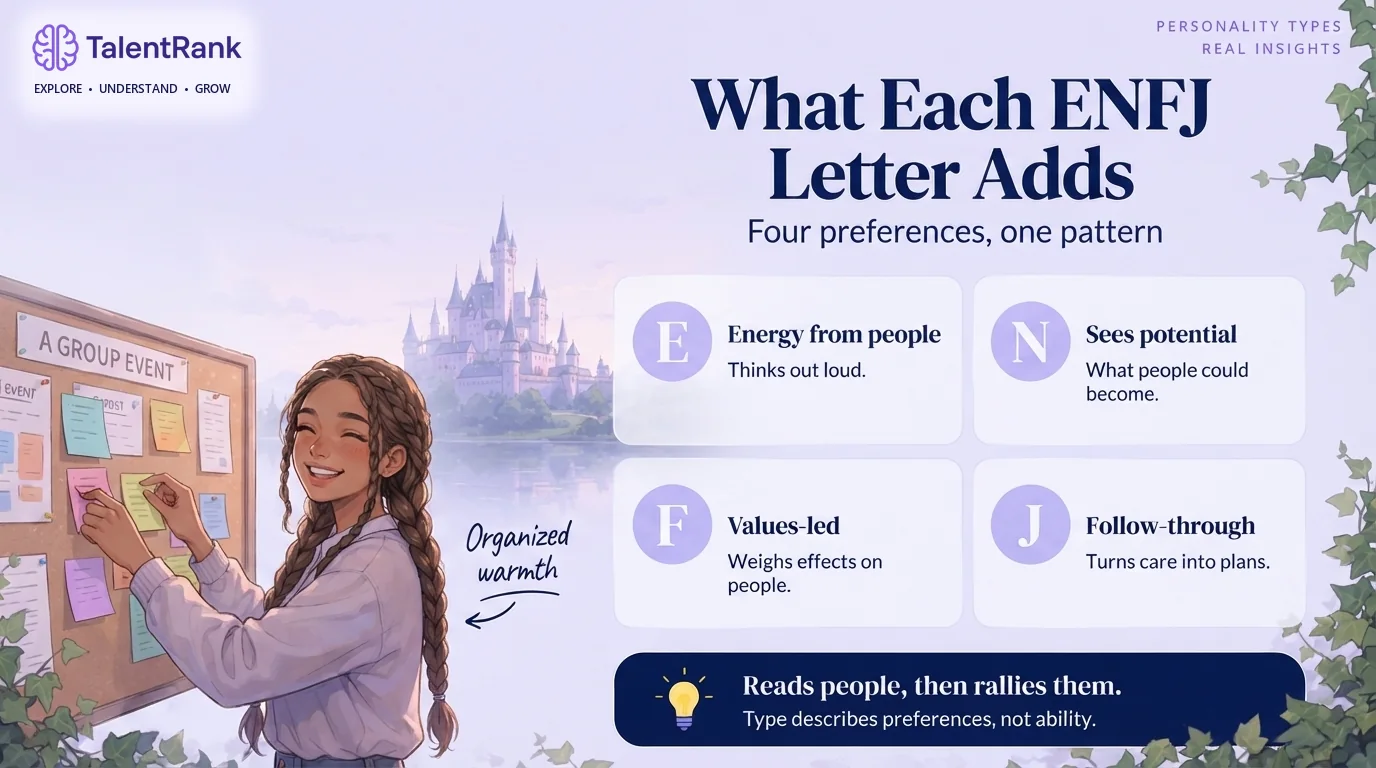
Extraversion: ENFJs tend to draw energy from people and activity, and they often think out loud. (See E vs. I in MBTI.)
Intuition: they notice patterns and possibilities, including what people could become.
Feeling: they weigh decisions by their effect on people and values. (See T vs. F in MBTI.)
Judging: they like plans, structure, and following through. (See J vs. P in MBTI.)
Put together, that describes someone who reads people well, imagines where a group could go, and then organizes everyone to get there.
Key ENFJ Characteristics
Deep Awareness of Others
MBTIonline says people with ENFJ preferences "tend to have a great awareness of others." They often notice when someone is uncomfortable, left out, or quietly struggling, sometimes before that person says anything.
A Drive to Help People Grow
The Myers-Briggs Foundation notes that ENFJs "find potential in everyone" and "want to help others fulfill their potential." That's a big part of why so many ENFJs end up teaching or mentoring. They like watching people improve.
Organized Warmth
The J in ENFJ matters. ENFJs don't just care about people. They turn that care into plans and follow-through. They're often the person who organizes the group dinner and remembers everyone's dietary needs.
Harmony-Seeking
MBTIonline says ENFJs "thrive on harmony and conflict resolution." They tend to work hard to keep groups together and to help people understand each other.
Sensitivity to Feedback
The Myers-Briggs Foundation describes ENFJs as "responsive to praise and criticism." Encouragement can energize them; harsh criticism can sting more than people expect.
ENFJ Strengths and Their Tradeoffs
Strength | How it helps | Possible tradeoff |
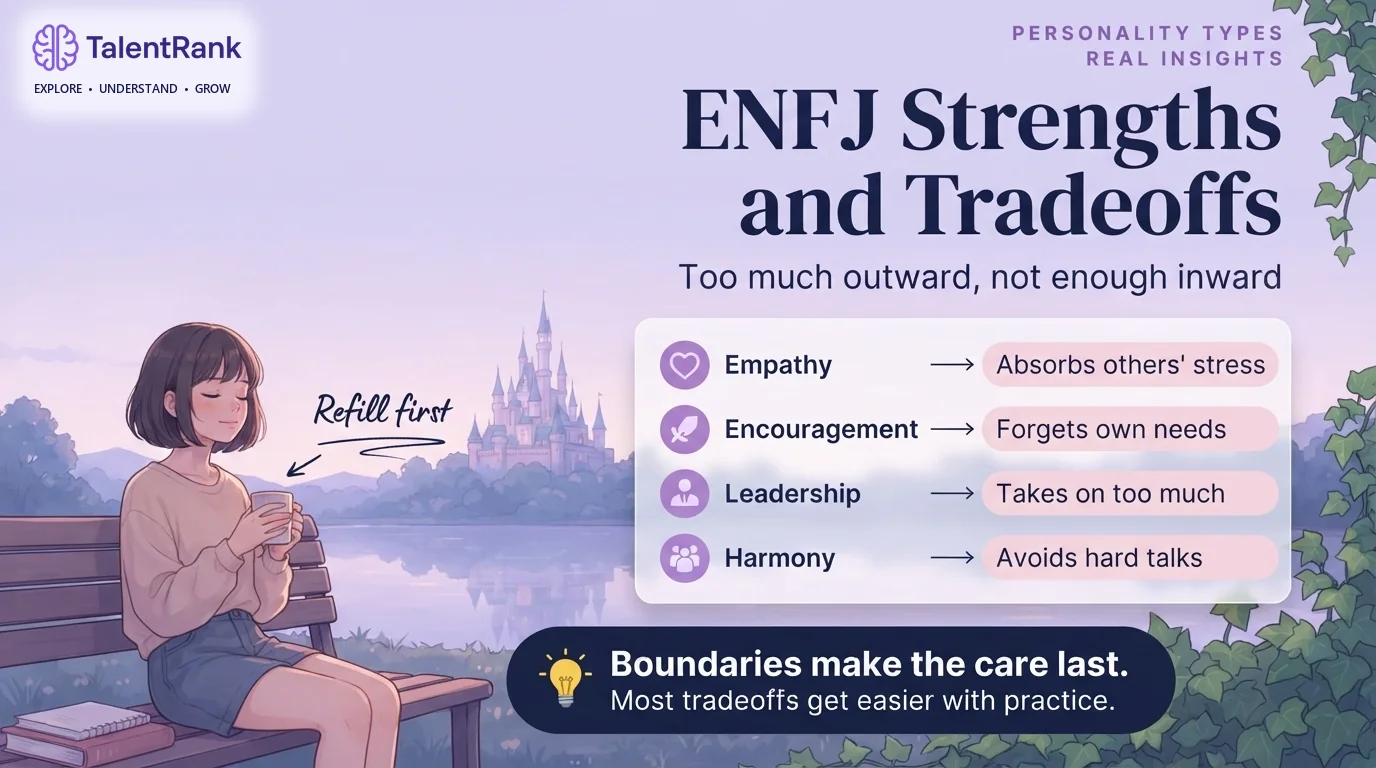
Empathy | Builds trust quickly | Can absorb other people's stress |
Encouragement | Brings out the best in others | May overlook their own needs |
Leadership | Rallies people around a goal | Can take on too much responsibility |
Harmony-seeking | Resolves conflict, unites groups | May avoid necessary hard conversations |
Organization | Turns ideas into plans | Can push their plan on others |
Loyalty | Stands by people for the long haul | May stay in draining situations too long |
MBTIonline names one blind spot directly: ENFJs are often "so concerned with the happiness of the people in their lives that they'll often put a friend or colleague's values before their own." That's the thread running through most ENFJ weaknesses: too much attention outward, not enough inward.
Common ENFJ Weaknesses
Over-giving: saying yes to every request, then feeling depleted.
Conflict avoidance: smoothing things over instead of addressing a real problem.
Taking criticism personally: hearing feedback on work as feedback on who they are.
Idealism: expecting people to grow as fast as the ENFJ imagines they could.
Over-managing: helping so much that it can feel controlling.
These aren't fixed flaws. Most get easier with clearer boundaries. Honest conversations help too.
ENFJ Work Style
ENFJs often do best in roles that combine people with a clear purpose: teaching, HR, training, counseling, healthcare, nonprofit leadership, and communications are common examples. They tend to enjoy being the person who develops others and brings a team together. (Our guide to ENFJ careers covers specific roles with pay and outlook data.)
What often helps ENFJs at work:
A mission they believe in.
Colleagues who communicate openly.
Clear boundaries around workload and emotional labor.
Recognition for the relationship work they do, which is often invisible.
ENFJs in Relationships
In relationships, ENFJs are often attentive and deeply invested in their partner's growth. They tend to plan thoughtful gestures and notice small changes in mood.
The challenge is balance. An ENFJ may give so much that their own needs go unspoken, then feel hurt when a partner doesn't notice. What helps: partners who ask directly how the ENFJ is doing, and ENFJs who practice saying what they need instead of waiting to be asked.
Hypothetical example: an ENFJ organizes a surprise party for a friend, handles every detail, and spends the evening making sure everyone is happy. At the end of the night, they realize they never actually talked to anyone about their own week. Learning to step out of host mode now and then is a common ENFJ growth point.
ENFJ Male: A Less Common Combination
According to MBTIonline's estimates, ENFJ is about twice as common among women (2.8%) as among men (1.4%) in U.S. samples. For ENFJ men, that can mean their warmth and emotional attunement sometimes stand out in environments that expect men to be more reserved.
An ENFJ man may find his strengths fit naturally in mentoring and team leadership. His core traits are the same as any ENFJ's; what differs is often how others react to a man who leads with empathy.
ENFJ vs. Similar Types
ENFP shares the warmth and enthusiasm but prefers flexibility (P) over structure (J).
ESFJ shares the people focus and organization but focuses more on concrete, present needs (S) than on long-term potential (N).
INFJ shares the insight and values but directs energy inward (I) and often prefers smaller groups.
ENFJ Characteristics in Fiction and Public Life
If you want to see ENFJ traits in action, our ENFJ characters guide looks at fictional examples, and our ENFJ celebrities guide shows which public figures are commonly typed as ENFJ and how reliable those typings are.
Beyond the Four Letters
Two ENFJs can differ a lot in how organized they are, how they handle stress, or how outgoing they feel on a given day. The Big Five model measures traits like agreeableness and extraversion on a spectrum, which can show those differences in more detail. (Our guide to high agreeableness covers a trait closely linked to ENFJ-style warmth.)
The TalentRank assessment measures your Big Five personality traits and takes about 12 to 15 minutes. It won't confirm an MBTI type, but it can show where you land on each trait. Take the TalentRank assessment.
Frequently Asked Questions About ENFJ Characteristics
What are the main ENFJ characteristics?
Warmth, empathy, strong awareness of others, a drive to help people grow, organized follow-through, and a preference for harmony.
What are ENFJ weaknesses?
Common ones include over-giving, avoiding conflict, taking criticism personally, and putting others' needs ahead of their own.
How rare is the ENFJ personality type?
MBTIonline estimates ENFJs at about 2.2% of the U.S. population, 2.8% of women and 1.4% of men.
Are ENFJ men rare?
Relatively. In MBTIonline's U.S. estimates, ENFJ is about half as common among men as among women.
What is the difference between ENFJ and ENFP?
Both are warm and people-focused. ENFJs prefer structure and planning (J), while ENFPs prefer flexibility and keeping options open (P).
Final Takeaway
ENFJ characteristics center on people. Noticing them. Encouraging them. Organizing them toward something better. Those strengths make ENFJs natural mentors and leaders, and the same focus can leave their own needs behind. Use the type as a mirror. And protect your energy, because caring for yourself makes it easier to keep caring for others.