


Tenya Iida, Erza Scarlet, Dwight Schrute, Hermione Granger, and Dolores Umbridge are some of the fictional characters most often typed as ESTJ. They're the rule-keepers and organizers of their stories: the class president, the enforcer, the person with the plan and the checklist, and sometimes the villain who takes order too far.
These typings are interpretations. No fictional character has taken an MBTI assessment, and fans often disagree. This guide explains why each character gets read as ESTJ, where the case is weaker, and how to judge an ESTJ typing yourself.
Quick List of ESTJ Characters
The confidence labels below reflect how strong the case is in this article's reading. They aren't test scores.
Character | Work | Medium | Interpretation | Why it's plausible |
Tenya Iida | My Hero Academia | Anime/manga | Stronger case | Rule-minded class rep, organizes and directs others |
Erza Scarlet | Fairy Tail | Anime/manga | Stronger case | Disciplined enforcer, takes charge, upholds standards |
Dwight Schrute | The Office (US) | TV | Stronger case | Loves hierarchy, rules, and practical results |
Vernon Dursley | Harry Potter | Books/film | Plausible | Obsessed with order, normality, and appearances |
Dolores Umbridge | Harry Potter | Books/film | Plausible | Rules and control taken to a cruel extreme |
Hermione Granger | Harry Potter | Books/film | Debated | Often typed ESTJ or ISTJ |
Miranda Priestly | The Devil Wears Prada | Film/novel | Debated | Often typed ESTJ or ENTJ |
What Makes a Character Seem ESTJ?
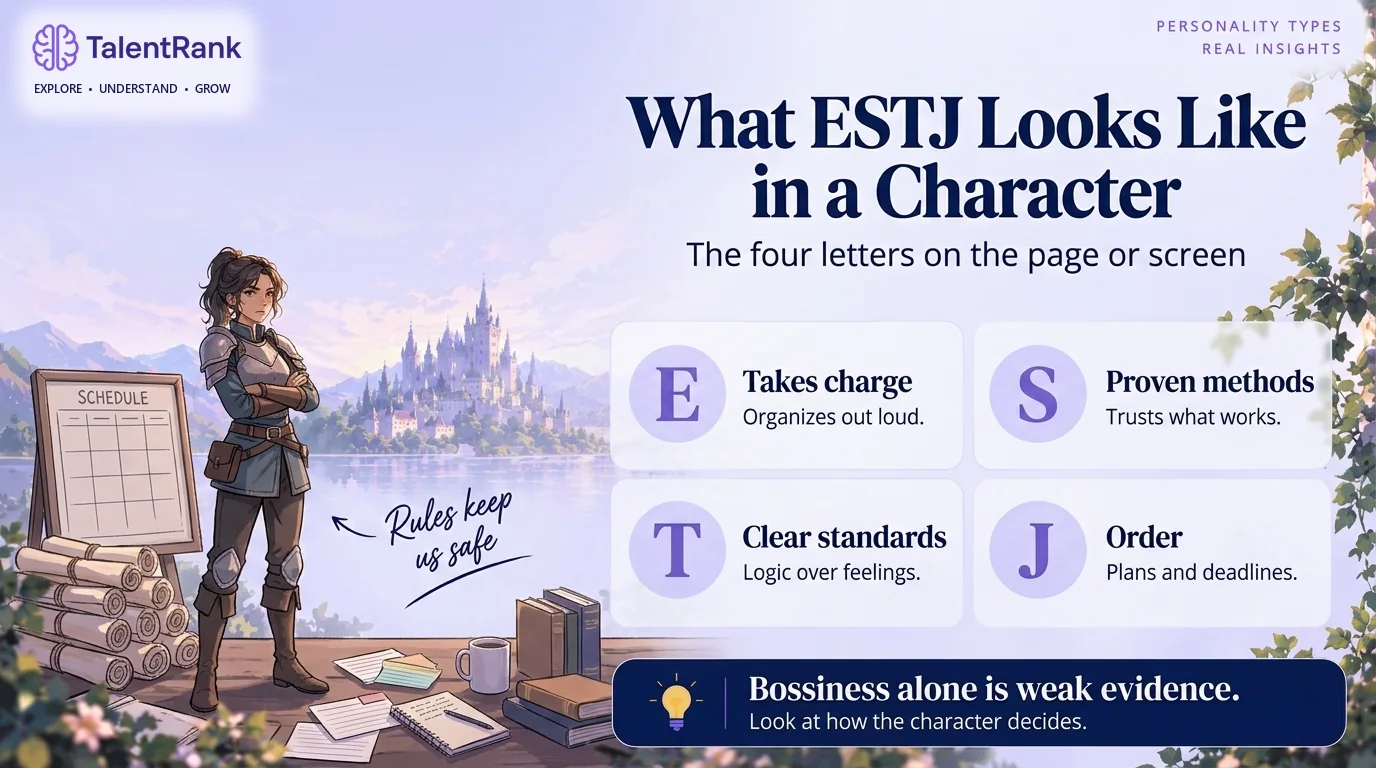
ESTJ stands for Extraversion, Sensing, Thinking, and Judging. The official MBTI preference descriptions go further than the "bossy rule-follower" stereotype.
Extraversion Means Taking Charge Out Loud
ESTJ characters tend to organize people directly: giving instructions, calling meetings, setting the agenda. They process by acting and speaking. (See TalentRank's E vs. I guide.)
Sensing Means Trusting What's Proven
Sensing is a preference for concrete facts and past experience. ESTJ characters usually trust established methods and get impatient with untested ideas. (More in our sensing vs. intuition guide.)
Thinking Means Standards Over Feelings
Thinking means decisions are weighed by logic and results. ESTJ characters often hold themselves and others to clear standards, which can make them fair, blunt, or harsh depending on the story. (Our thinking vs. feeling guide covers this letter.)
Judging Means Order and Closure
Judging is a preference for structure and decisions made early. ESTJ characters like plans, schedules, and rules, and they usually enforce them.
ESTJ Anime Characters
Tenya Iida, My Hero Academia
Iida is the class representative of Class 1-A, famous for his chopping hand gestures and his insistence that everyone follow the rules. He organizes classmates, reminds them of procedure, and takes responsibility seriously. His arc after his brother is injured, when he chases revenge and then recognizes his mistake, shows the growth of an ESTJ character learning that rules and people both matter.
Erza Scarlet, Fairy Tail
Erza is one of Fairy Tail's strongest mages and its unofficial disciplinarian. She keeps rowdy guild members in line, takes charge in a crisis, and holds herself to exacting standards. Her fierce loyalty to her friends adds warmth, but her default mode is command.
ESTJ Characters in Movies and TV
Dwight Schrute, The Office (US)
Dwight loves hierarchy, rules, and titles, from "Assistant to the Regional Manager" to his role as a volunteer sheriff's deputy. He's also one of the office's top salesmen and runs a beet farm. His practical, results-driven approach and devotion to authority make him a widely cited ESTJ example, played for comedy.
Miranda Priestly, The Devil Wears Prada (Debated)
Miranda runs a fashion magazine with exacting standards and zero patience for incompetence. Many fans type her ESTJ for her focus on execution and her command of every detail. Others argue ENTJ, pointing to her strategic control of the industry and her long game in the film's final act.
ESTJ Characters in Books
Hermione Granger, Harry Potter (Debated)
Hermione follows rules, studies relentlessly, organizes her friends' homework, and prepares for everything. Many fans type her ESTJ for her outspoken, organized approach. Others read her as ISTJ, pointing to how much she prefers books and preparation to social activity. Her willingness to break rules for her friends complicates both readings.
Vernon Dursley, Harry Potter
Vernon is obsessed with being normal, with appearances, and with keeping anything strange out of his house. He's a comic, unpleasant example of ESTJ preferences with no warmth or flexibility behind them.
Dolores Umbridge, Harry Potter
Umbridge fills Hogwarts with Educational Decrees and enforces them with cruelty. She's often typed ESTJ as an example of how a love of order and authority can turn into abuse of power. She's a reminder that type describes preferences, not character. Plenty of ESTJ-typed heroes share her love of structure without her cruelty.
How to Evaluate Whether a Character Fits ESTJ
Bossiness alone is weak evidence. A stronger case looks for patterns:
Direct leadership: does the character take charge and organize others out loud?
Proven methods: do they trust established rules and experience over new ideas?
Standards-based decisions: do they judge by logic and results, even when it's unpopular?
Structure and closure: do they push for plans, schedules, and decisions?
Consistency across versions: does the reading hold in the book, film, and show?
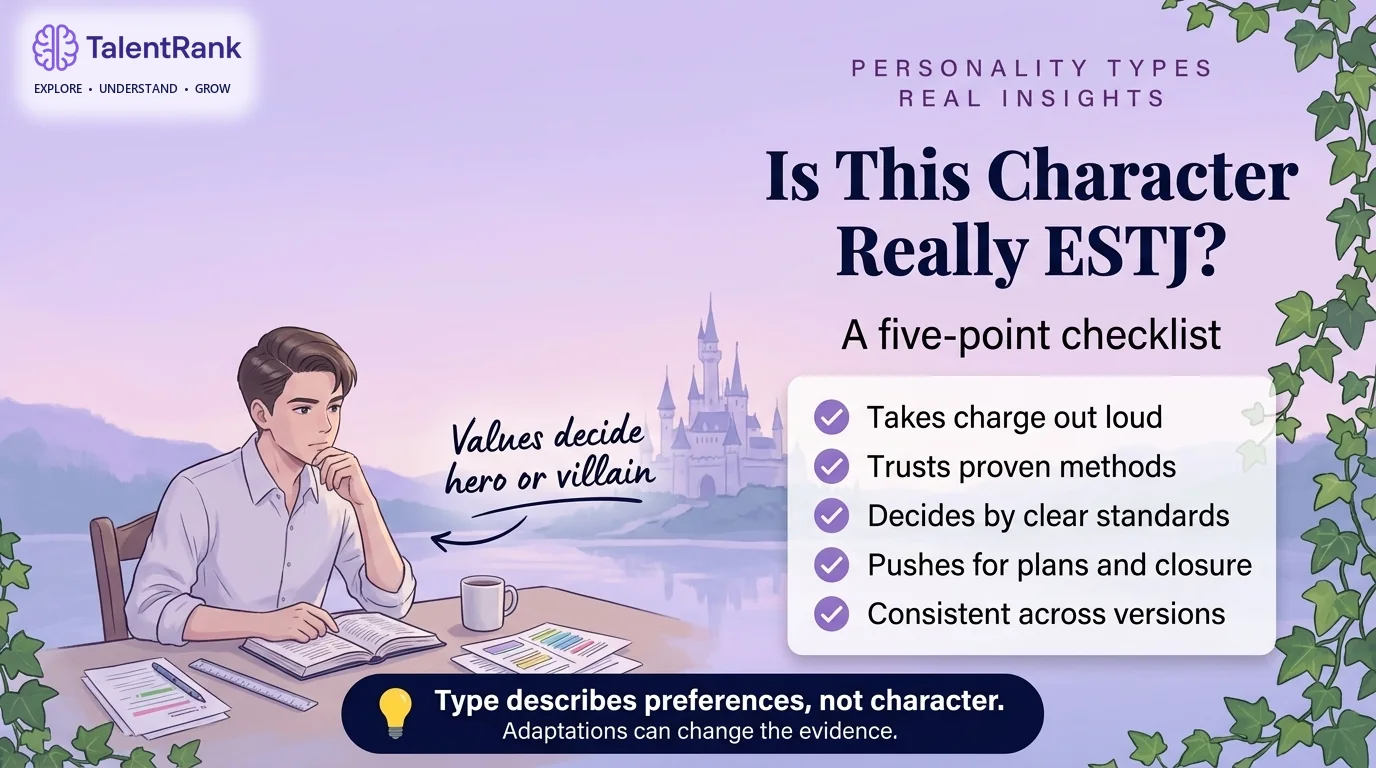
If a character fits several of these, an ESTJ reading is plausible. If they're only "bossy", the case is thin.
ESTJ or Another Type?
ISTJ characters share the rules and reliability but are more reserved. See our ISTJ characters guide.
ENTJ characters share the command and standards but plan for the long term and embrace new strategies. See our ENTJ characters guide.
ESFJ characters share the structure and tradition but decide more by harmony and people's feelings. See our ESFJ characters guide.
ESTJ-T Characters and What Fiction Can Show
The -A and -T suffixes come from 16Personalities, which adds a fifth scale called Identity and builds its model on Big Five research. (16Personalities) They aren't part of the official MBTI, and a story rarely offers enough consistent evidence to judge them.
Explore Your Own Personality Traits
Typing characters can be a fun way to reflect on your own patterns. The TalentRank assessment goes further by measuring your Big Five personality traits, like conscientiousness, extraversion, and agreeableness. It takes about 12 to 15 minutes and won't confirm an MBTI type, but it gives you a more detailed picture. Take the TalentRank assessment, and see our guide to ESTJ jobs and careers if you're thinking about work.
Frequently Asked Questions About ESTJ Characters
What fictional characters are ESTJ?
Characters commonly typed as ESTJ include Tenya Iida, Erza Scarlet, Dwight Schrute, Vernon Dursley, and Dolores Umbridge. Hermione Granger and Miranda Priestly are also often typed ESTJ, though other readings exist.
Who are some ESTJ anime characters?
Tenya Iida from My Hero Academia and Erza Scarlet from Fairy Tail are two of the strongest examples.
Is Hermione Granger ESTJ or ISTJ?
Both are argued. The ESTJ reading emphasizes her outspoken organization of others; the ISTJ reading emphasizes her preference for study and preparation.
Are ESTJ characters usually villains?
No. Fiction uses ESTJ traits for heroes like Iida and Erza as well as villains like Umbridge. The difference lies in values, not type.
What is an ESTJ-T character?
The -T (Turbulent) label comes from 16Personalities, not the official MBTI, and it's rarely possible to judge from a story alone.
The Takeaway
ESTJ characters tend to take charge, trust proven methods, and hold everyone to clear standards. Iida, Erza, and Dwight show that pattern at its best and funniest, while Umbridge shows what happens when order loses its heart. Treat every typing as an interpretation, and look for consistent evidence across the story.